
EU quantum programme
the flagship, the chips act and the sovereignty question
Key facts
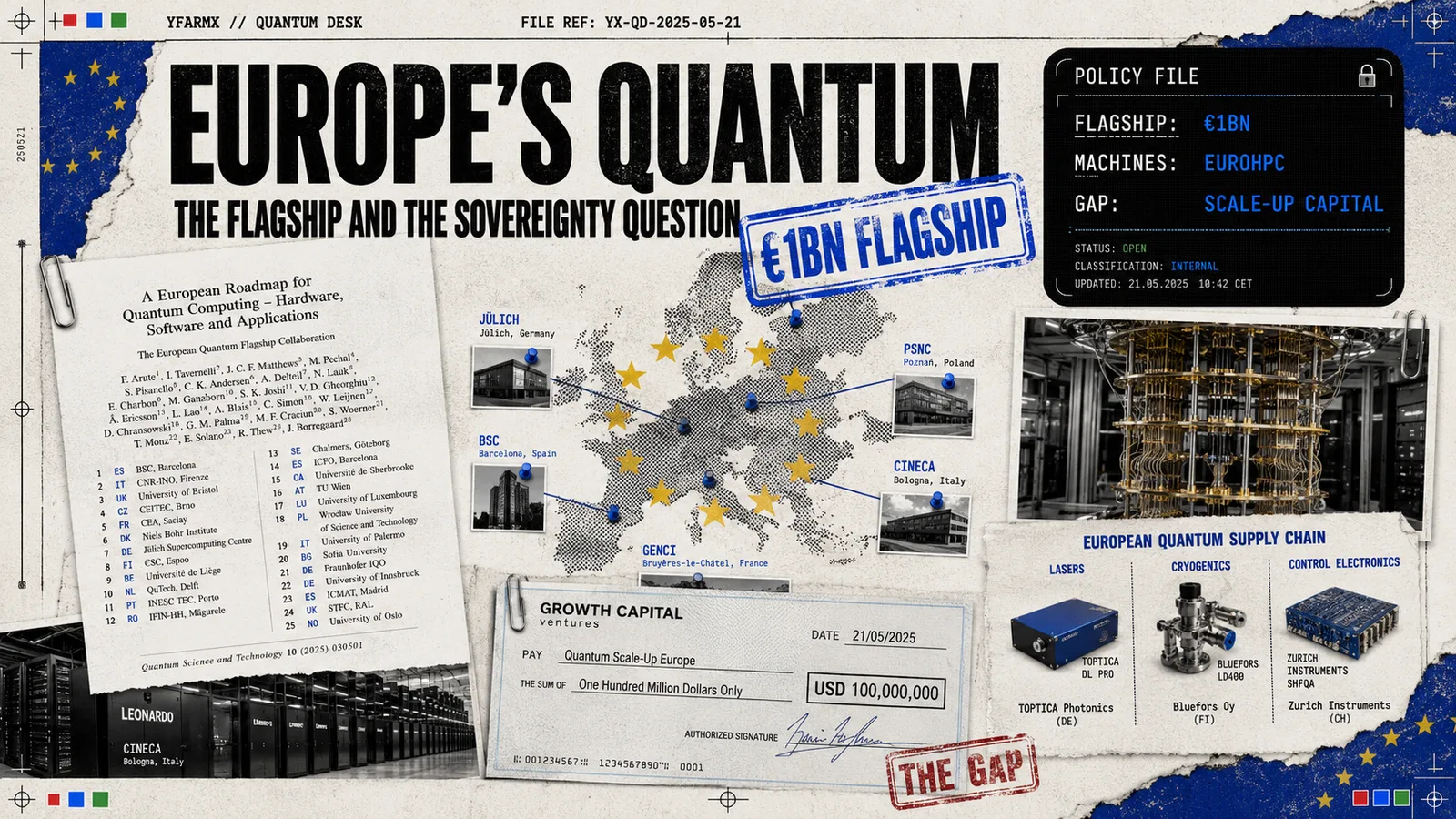
- €1bnlaunched 2018, ten years
- Flagship
- EuroHPCsited across member states
- Machines
- 2025EU Quantum Strategy
- Strategy
- Researchweakness: scale-up capital
- Strength
Europe writes many of the field's best papers and files a strong share of its patents. Turning that into companies Europe still owns in ten years is the part it has historically been worst at.
The European Union’s quantum effort is large, well funded and organised very differently from the American or Chinese programmes. Where the United States relies heavily on private capital and defence procurement, and China on centralised state direction, Europe funds through multi-country research consortia and shared infrastructure. That structure explains both its strengths and its persistent frustration.
The Quantum Flagship
The Quantum Flagship, launched in 2018, is the centrepiece: a ten-year initiative with around €1bn of funding, coordinating hundreds of research groups across member states. It covers computing, communication, simulation, sensing and the underlying science, and it has done what it was designed to do, which is to build a deep, connected European research community.
Alongside it, the EuroHPC Joint Undertaking has been installing quantum computers at supercomputing centres across the continent, pairing them with existing high-performance computing sites in several member states. The reasoning is practical: near-term quantum machines work best as accelerators attached to conventional supercomputers rather than as standalone devices, and siting them together gives European researchers hands-on access without depending on American cloud providers.
The sovereignty argument
Technological sovereignty runs through European quantum policy in a way it does not elsewhere. The concern is concrete: Europe funds excellent research, and the resulting companies then raise growth capital in the United States, list on American exchanges, or are acquired outright. The same pattern that shaped European technology in previous decades is visible again, and quantum policy is explicitly designed to interrupt it.
That has produced a push for European supply chains in components, cryogenics, lasers and control electronics, where Europe has genuine industrial strength, and for European cloud access to European machines.
Post-quantum security
The EU has also moved on the defensive side, coordinating member states towards migration timelines for post-quantum cryptography, with roadmaps that set out when critical infrastructure should complete the transition. This runs alongside NIST’s standards rather than competing with them, since the algorithms are the same; what differs is the deadline-setting and the emphasis on European control of the implementation.
Where it stands
Europe’s research position is strong and its component supply chain genuinely competitive. The unresolved problem remains scale-up capital: the sums a quantum hardware company needs to go from laboratory to production are large, patient and more readily available elsewhere. The programme’s success will be measured by how many European quantum companies are still European in a decade.
More Quantum
All Quantum →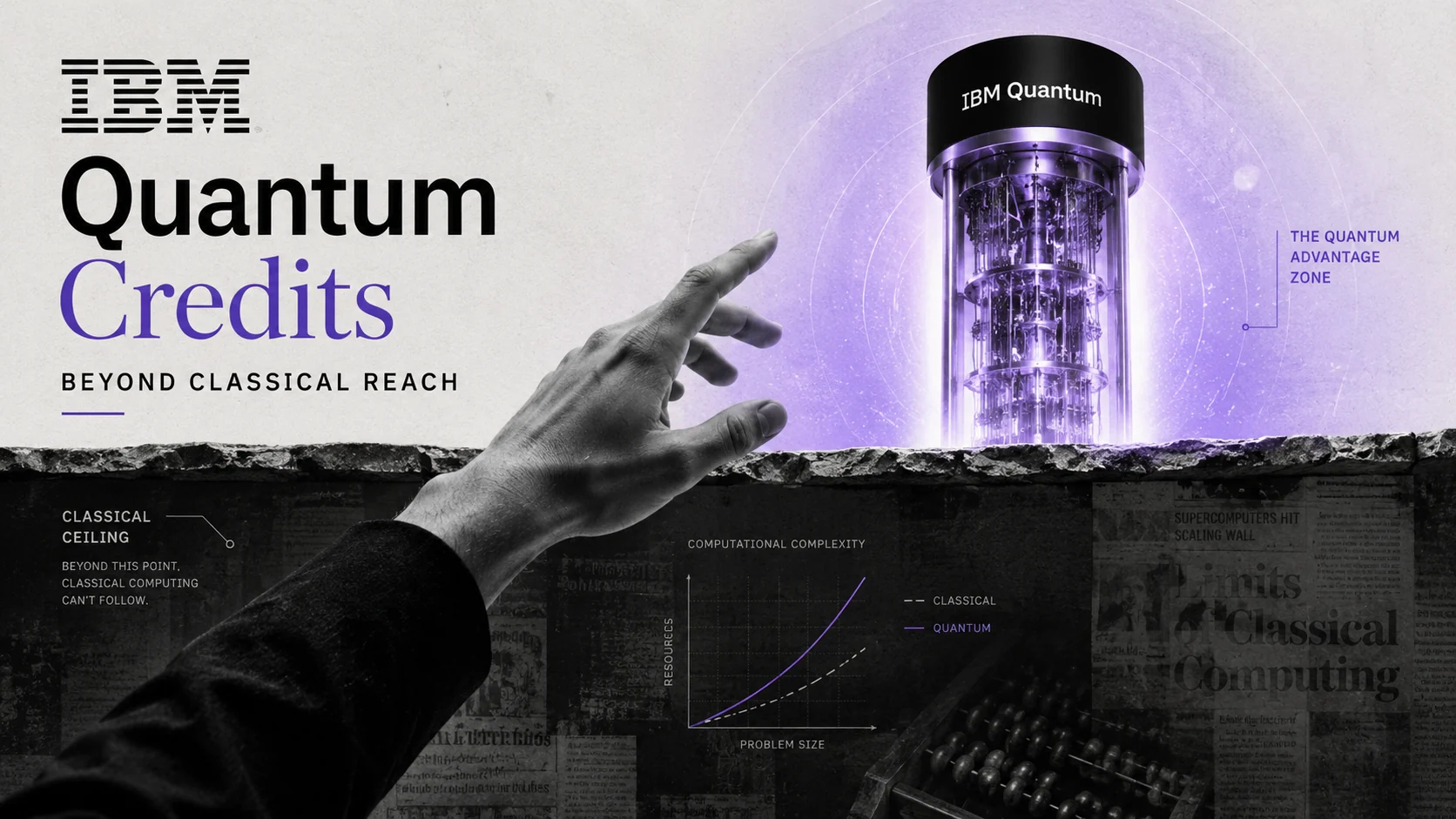
IBM quantum credits programme produces results beyond classical reach
IBM published results on 3 July from its Quantum Credits programme, which provides free access to its most capable hardware for university faculty and research scientists.