
US quantum policy
two executive orders and the federal purse
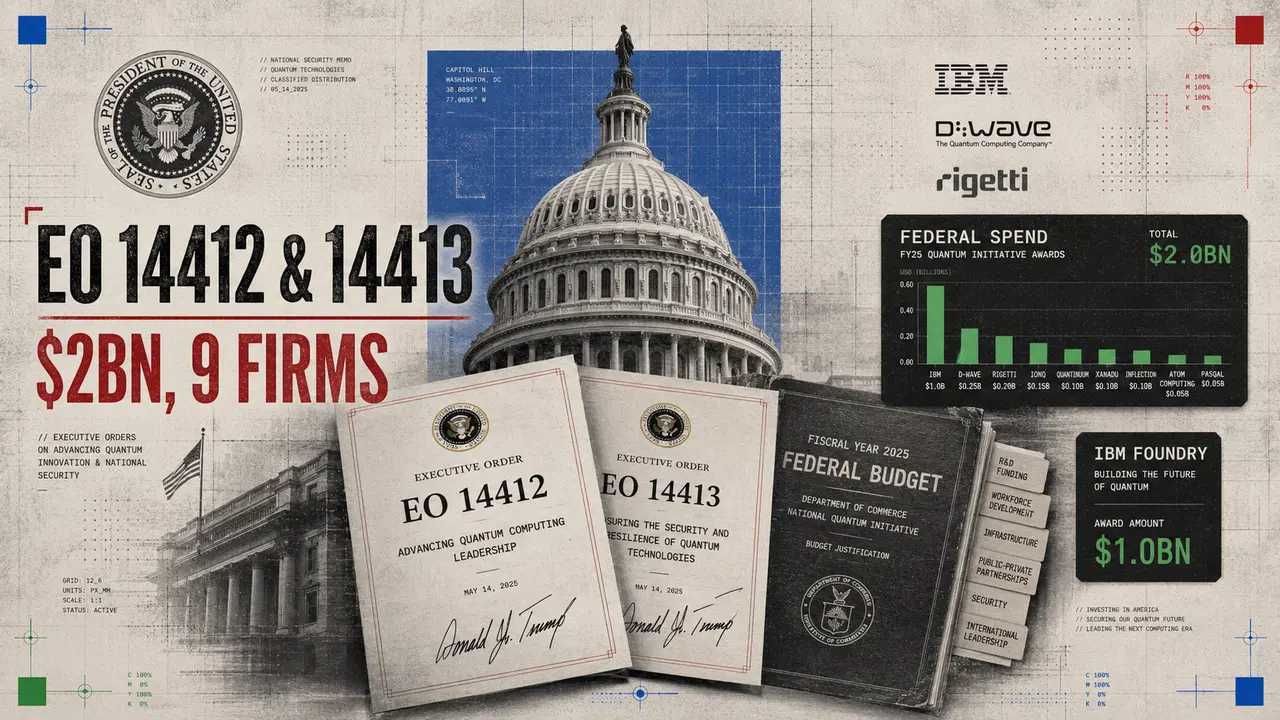
Key facts
- Jun 2026two executive orders
- Signed
- 2EO 14412 & 14413
- Orders
- $2bnnine companies
- Funding
- $1bnproposed award
- IBM foundry
- 9incl. D-Wave, Rigetti
- Firms backed
Washington has decided quantum is strategic: two executive orders, two billion dollars across nine companies, and hard federal deadlines for quantum-proof encryption. The state is now the sector's biggest customer and its referee at once.
What happened
The phrase quantum executive order entered the American policy vocabulary on 22 June 2026, when the White House signed two orders on the same day and published them in the Federal Register three days later, on 25 June. Together they set the direction of federal quantum policy for the rest of the decade, pairing a defensive measure with an ambitious one. Read alongside the money that accompanies them, the two orders explain why so much of the current quantum market runs through Washington rather than through ordinary commercial demand.
The two orders
The first quantum executive order, EO 14412, carries the title “Securing the Nation Against Advanced Cryptographic Attacks” and mandates the migration of federal systems to post-quantum cryptography. It is the defensive half: an acknowledgement that the encryption protecting government data will not survive a capable quantum computer, and an instruction to replace it on a fixed timetable. The second, EO 14413, “Ushering in the Next Frontier of Quantum Innovation”, is the expansive half. It directs an update to the National Quantum Strategy and commissions work on workforce institutes, quantum sensing and networking plans, and strategies to secure a domestic supply chain for the components a quantum industry needs.
The money
Policy on paper achieves little without appropriations, and here the numbers are substantial. In May the administration announced roughly $2bn in funding incentives and equity stakes, drawn from appropriations under the CHIPS and Science Act, spread across nine companies that include D-Wave and Rigetti. Separately, a proposed $1bn award to IBM would fund what is billed as America’s first purpose-built quantum foundry, a dedicated facility for manufacturing quantum processors to a common standard rather than hand-building them in university laboratories, a step every maturing hardware industry eventually takes. Underneath the headline sums, the Defense Advanced Research Projects Agency continued its Quantum Benchmarking Initiative, announcing Stage B selections that narrow the field of companies whose claims it considers worth testing.
Four of the nine companies from May signed definitive CHIPS R&D agreements with the Department of Commerce on 8 September 2026, each worth up to $100m: D-Wave, Rigetti, Quantinuum and PsiQuantum. The Department of Energy opened the Quantum Genesis Q Competition on 17 September 2026 under RFA DE-FOA-0003657, with up to $215m in planned funding for a fault-tolerant machine, and applications close on 19 October 2026. On 22 September 2026 Microsoft opened a quantum research centre in Maryland with the University of Maryland, where DARPA has full on-site access to topological qubits built on the Majorana 2 chip for independent testing.
The equity stakes
The equity stakes are the most striking feature. By taking positions in companies such as D-Wave and Rigetti rather than simply awarding grants, the government is behaving less like a customer and more like an investor, tying public finances directly to the fortunes of named firms. Grants, once spent, are gone; an equity stake binds the taxpayer to whatever the company becomes. That is unusual for a technology this immature, and it signals a judgement that quantum computing is strategic enough to warrant industrial policy of a kind more often reserved for defence or semiconductors.
Why the analysis differs
The useful conclusion to draw from all this is about the character of the revenue, not its size alone. A substantial share of near-term quantum income is government infrastructure spending: money committed through a quantum executive order, an appropriation or a defence programme rather than earned from paying commercial users. Government spending follows slower and more durable rules than commercial technology demand. It is harder to win, tied to strategy and appropriations cycles, and less prone to evaporate in a downturn, though it is also not the same thing as a market of customers buying a product because it solves their problem.
For anyone following the field, the quantum executive orders are worth watching as a leading indicator. Whether the migration deadlines in EO 14412 hold, whether the National Quantum Strategy update produces concrete programmes, and whether the equity stakes and the IBM foundry proposal survive contact with budgets will say more about the real trajectory of American quantum computing than any single hardware announcement. The policy has set the frame; delivery against it is the test to come. For the wider technology, see our quantum explainers and the main quantum hub.
IonQ enters DARPA’s final assessment stage
IonQ announced entry into Stage C of DARPA’s Quantum Benchmarking Initiative on 7 October 2026. DARPA will independently test and validate successive generations of its Superion systems through 2029. The agreement provides potential funding of up to $300m; amounts beyond the initial obligation depend on future appropriations and DARPA decisions. DARPA’s programme assesses whether a proposed machine can deliver useful work at an economic cost.
Six teams enter the final assessment stage
DARPA’s 8 October roster lists Atom Computing, Diraq, IBM, IonQ, Microsoft and PsiQuantum in Stage C of its Quantum Benchmarking Initiative. Independent teams will assess whether each proposed system can be built and operated at a useful economic cost. DARPA’s announcement sets out the independent review process. Each team’s design and delivery claims remain subject to that assessment.
More Quantum
All Quantum →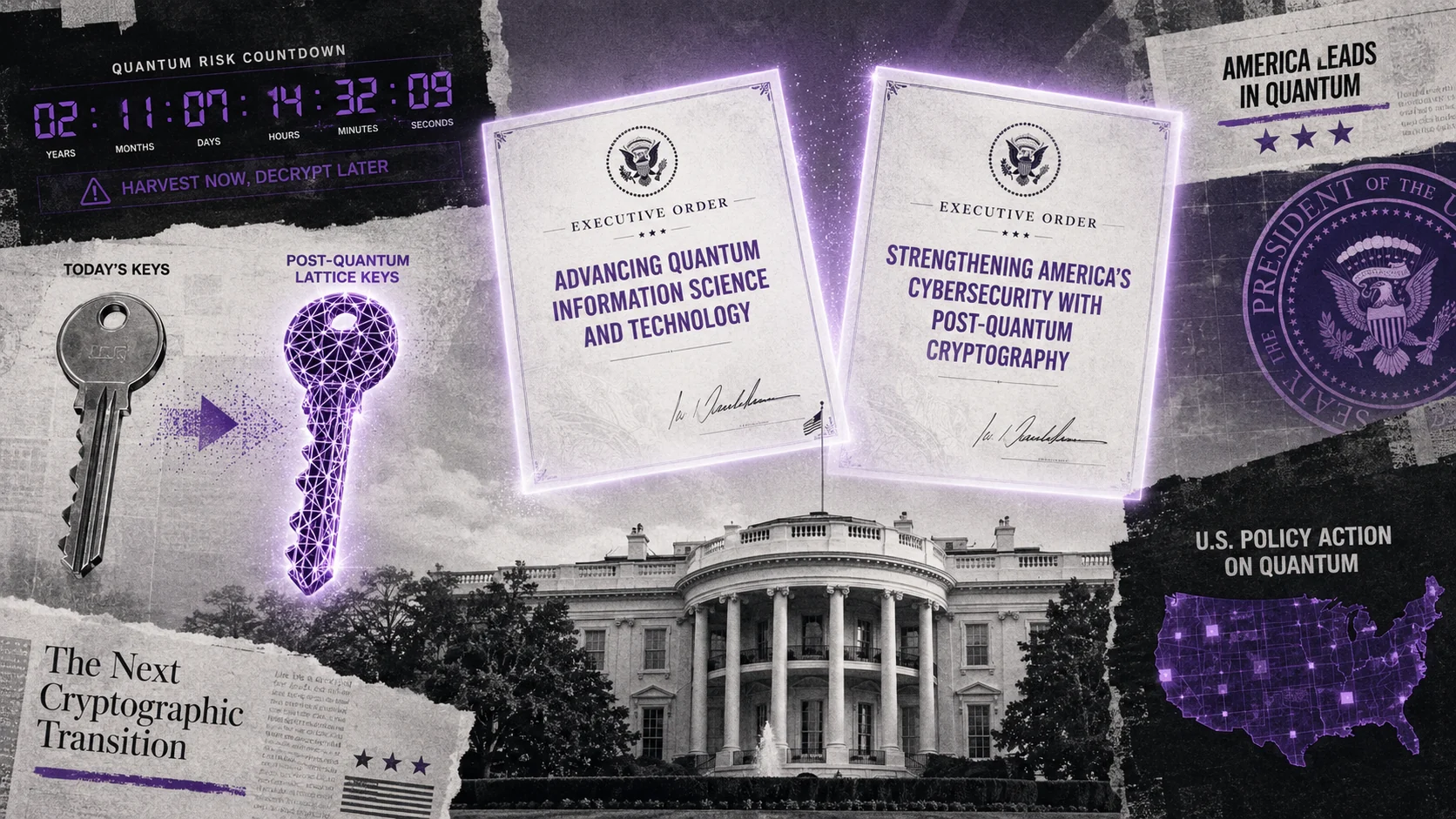
Two quantum executive orders put federal cryptography on a clock
President Trump signed two quantum executive orders on 22 June, published in the Federal Register three days later. Executive Order 14412, Securing the Nation Against Advanced Cryptographic Attacks, mandates an accelerated government-wide migration to post-quantum cryptography.
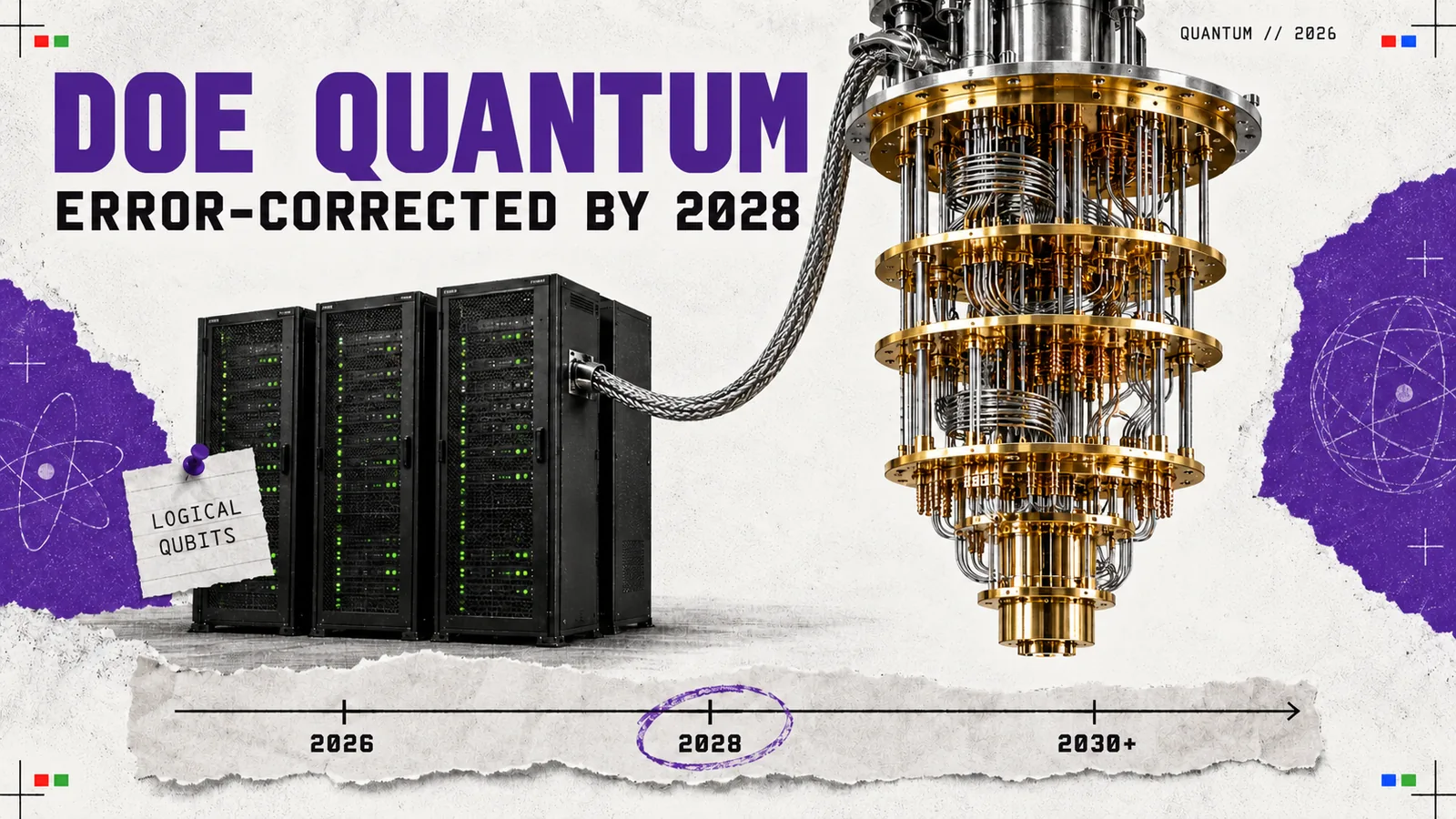
DOE advisers chart path to error-corrected quantum computer by 2028
Advisers to the US Department of Energy set out a three-phase quantum roadmap whose first phase aims at DOE's goal of an error-corrected quantum computer by 2028. Under Secretary Darío Gil announced it on 17 September 2026. Their illustrative 2028 range is about 50 to 100+ logical qubits.
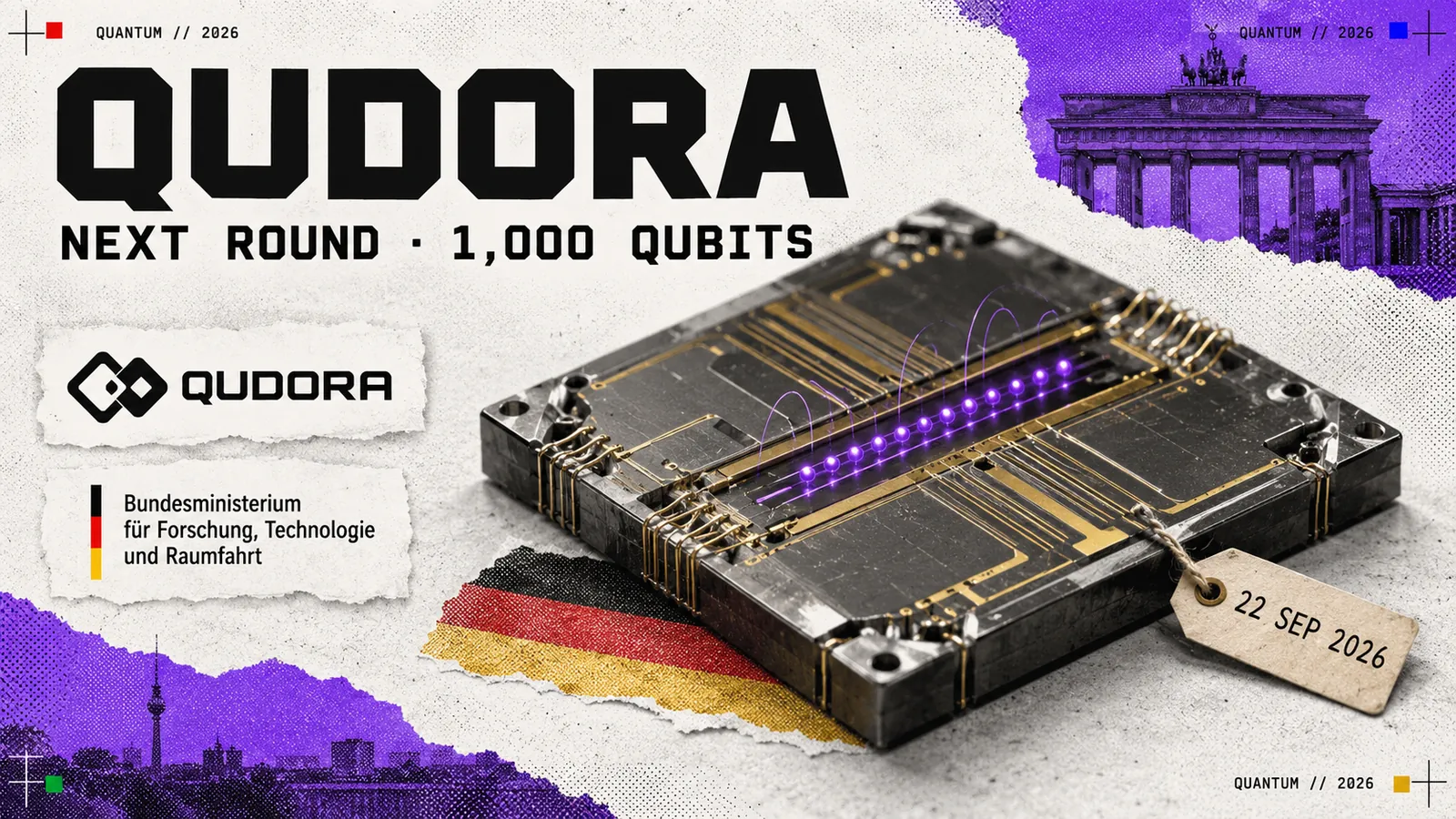
Germany's race for a 1,000-qubit quantum computer: QUDORA's team advances
Germany's research ministry has put a seven-member consortium led by the start-up QUDORA through to the next round of its contest to build a trapped-ion quantum computer with at least 1,000 physical and 50 logical qubits. The NFQC-1k project totals about €122m ($139.8m) over up to five years.