
UK quantum programme
a ten-year, £2.5bn national bet
Key facts
- £2.5bnover ten years
- Commitment
- 2023National Quantum Strategy
- Strategy
- 5announced 2024
- Research hubs
- NQCCHarwell, Oxfordshire
- Flagship centre
Britain was early to this, funding quantum research a decade before it was fashionable. The open question is whether it can keep the companies it grows, or watches them list and relocate elsewhere.
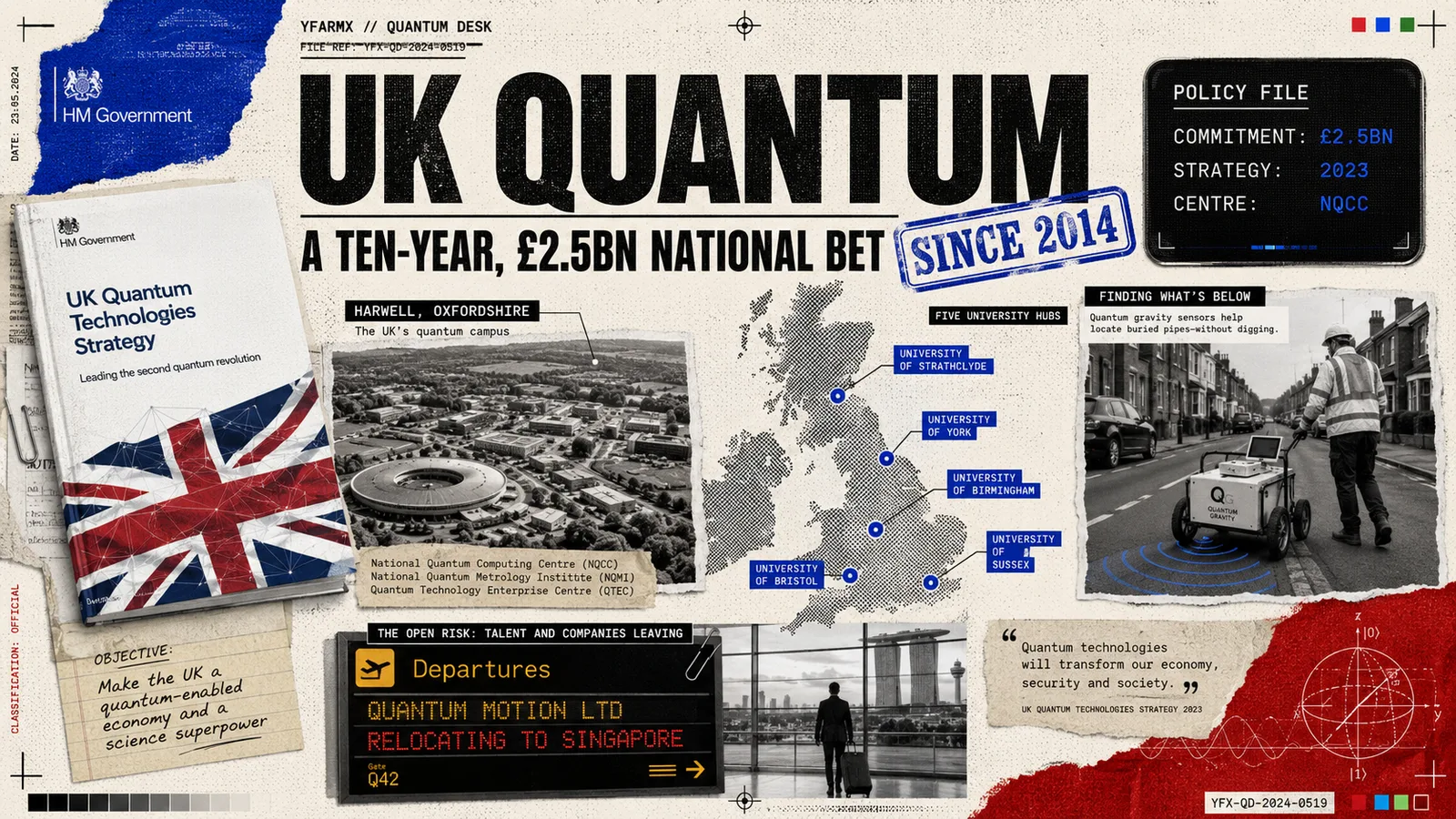
The United Kingdom was unusually early to treating quantum technology as industrial policy, launching a national programme in 2014 when most governments still treated the field as pure physics. That head start is the foundation of the current National Quantum Strategy, published in 2023, which commits £2.5bn of public money over ten years.
What the strategy covers
The strategy is deliberately broader than computing. It spans four areas: quantum computing, quantum sensing and timing, quantum imaging, and quantum communications. Sensing and timing receive more emphasis in the UK than in most national programmes, partly because the applications arrive sooner. A quantum gravity sensor that finds buried pipes without digging up a road, or a clock accurate enough to hold navigation together when satellite signals fail, is a nearer prospect than a fault-tolerant computer.
Delivery runs through several institutions. The National Quantum Computing Centre at Harwell in Oxfordshire is the flagship facility, hosting testbeds from multiple companies so researchers and businesses can use real hardware without buying it. Five research hubs announced in 2024 spread the work across universities, each with an application focus. The National Physical Laboratory anchors measurement and standards.
The strengths
Britain’s academic base in this field is genuinely strong, and the spinout record reflects it: Oxford Ionics in trapped ions, Universal Quantum, Quantum Motion in silicon spin qubits, ORCA Computing in photonics, and a substantial cluster around Oxford, Cambridge, Bristol and Glasgow. The country produces quantum companies at a rate well out of proportion to its size.
Procurement has also been used deliberately, with government buying quantum systems to give domestic companies early customers, which is often more useful to a young hardware company than grant funding.
The weakness
The recurring criticism is not about science but capital. British quantum companies frequently raise their later rounds from American investors, and several have been acquired by or relocated towards the United States, where both venture funding and government contracts are larger. Oxford Ionics, bought by America’s IonQ in 2025, is the case most often cited. The strategy’s ambition to build a domestic industry runs up against a funding ecosystem that struggles to write the cheques a hardware company needs at scale.
Where it stands
The UK holds a position it earned early and now has to defend, with a strong research pipeline, a credible national facility and a persistent question about whether the value created stays in the country. The programme’s second half will be judged on companies retained rather than papers published.
More Quantum
All Quantum →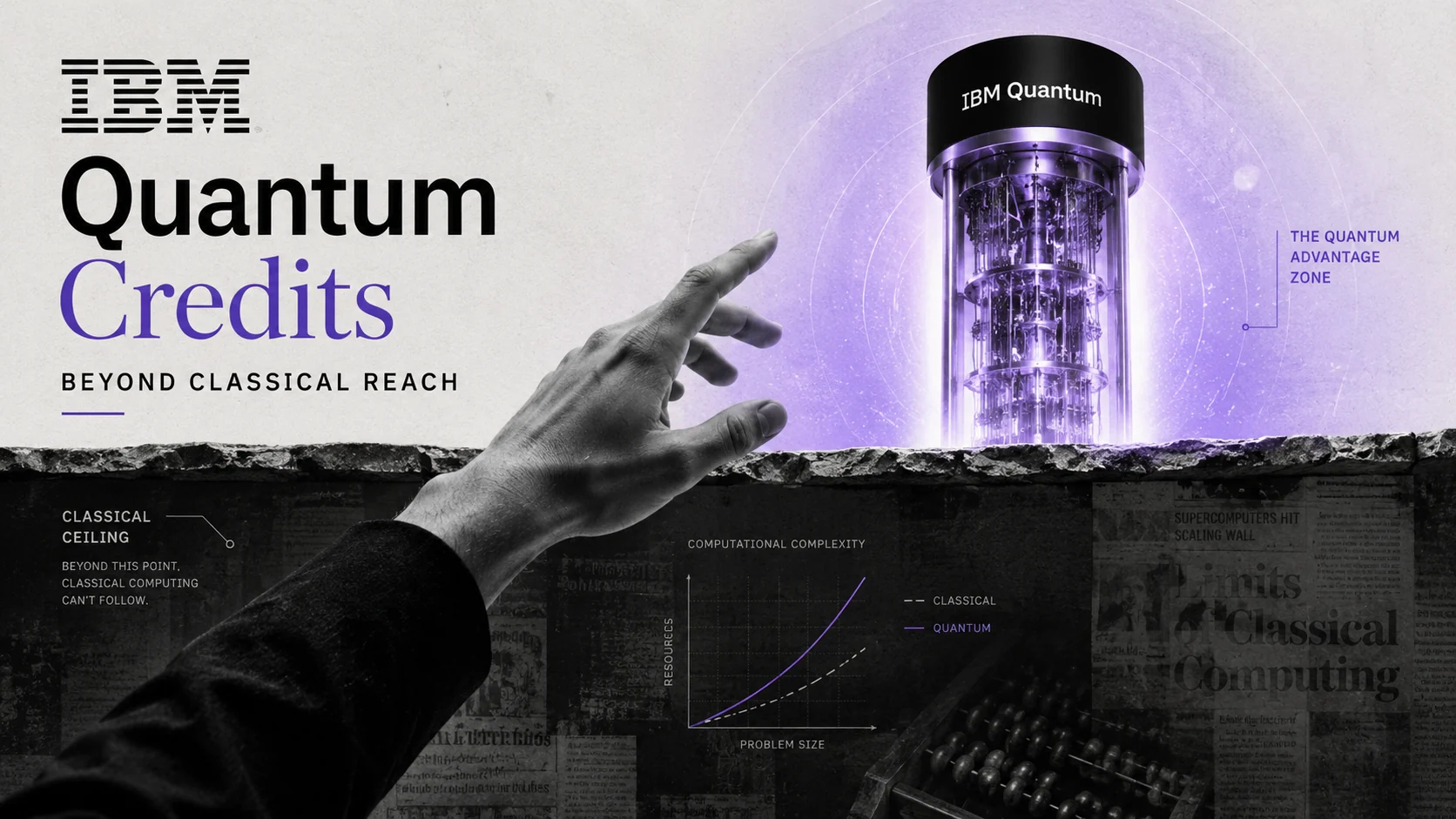
IBM quantum credits programme produces results beyond classical reach
IBM published results on 3 July from its Quantum Credits programme, which provides free access to its most capable hardware for university faculty and research scientists.