
Electric Coin Co
Zcash
optional privacy on bitcoin's blueprint
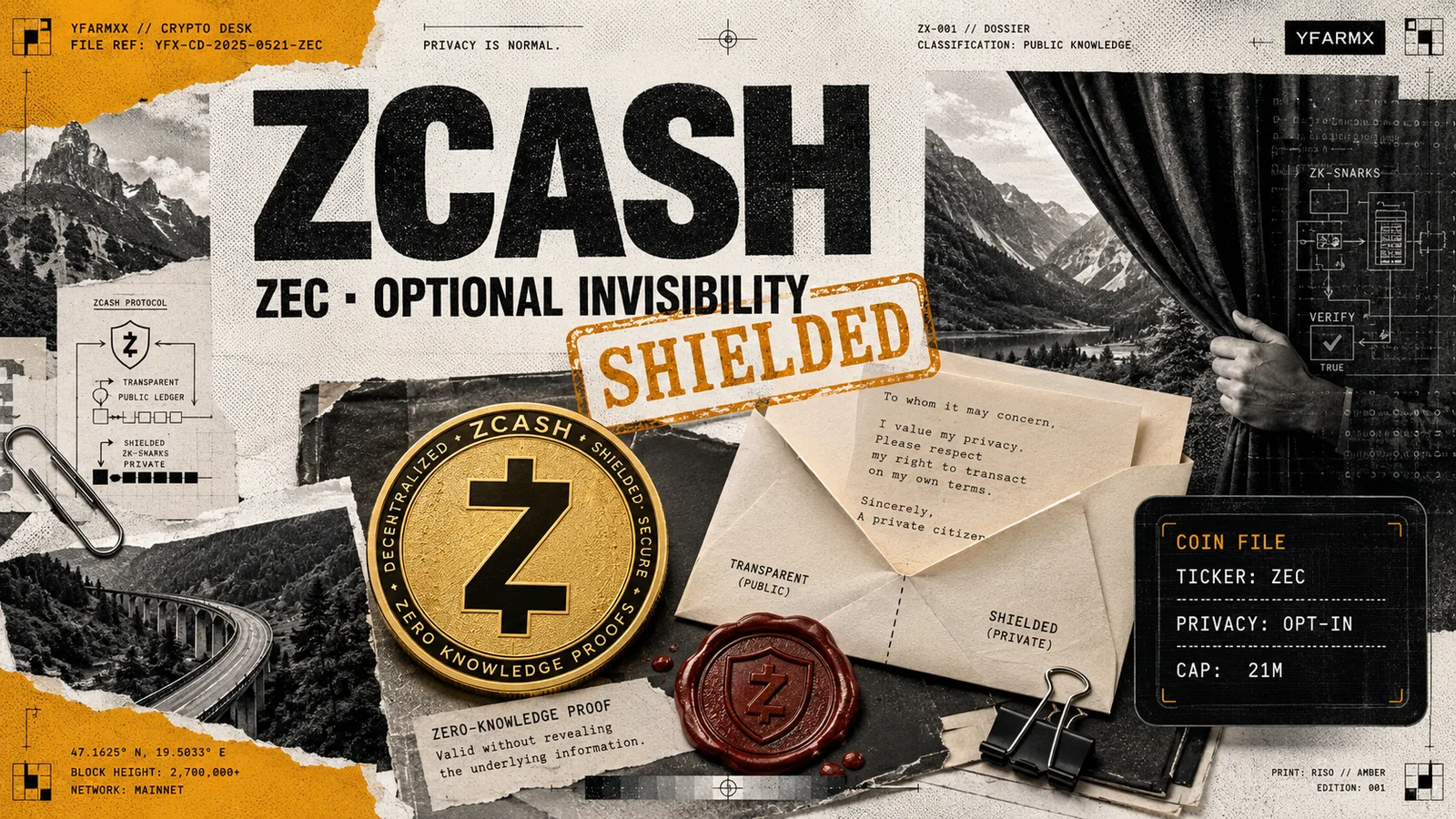
Key facts
- #10by market value
- Rank
- Privacy coinoptional shielded transfers
- Type
- 2016Electric Coin Co
- Launched
- 21msame cap as bitcoin
- Supply
Zcash is a privacy coin from 2016 that uses zero-knowledge proofs to offer shielded transactions on a bitcoin-style 21 million cap. It had about $19.95 billion in market value, rank 10, on 13 October 2026.
What it is
Zcash is a cryptocurrency built to answer bitcoin’s privacy problem: every bitcoin payment is public, forever. Launched in October 2016 by the cryptographer Zooko Wilcox and the Electric Coin Co, it grew out of academic work on the Zerocash protocol by researchers at Johns Hopkins, MIT and elsewhere. It keeps bitcoin’s blueprint, proof-of-work mining, halvings and a hard cap of 21 million coins, but adds optional shielded transactions that hide sender, receiver and amount. One memorable fact: in its first week, with almost no coins yet mined, ZEC briefly traded above $3,000 (CoinGecko), a record it has never revisited.
How it works
The core technology is the zk-SNARK, a zero-knowledge proof: a way of proving a statement is true, such as “this payment is valid and creates no coins from nothing”, without revealing any of the details behind it. Zcash has two kinds of addresses. Transparent ones behave like bitcoin’s and are visible to everyone; shielded ones encrypt the details on-chain, with validity guaranteed by the proofs. Users can also share view keys, allowing an accountant or auditor to see chosen transactions, privacy with a receipt. Early versions depended on a “trusted setup” ceremony to generate the system’s parameters; the Halo proving system, activated in the 2022 network upgrade, removed that requirement.
The story so far
Zcash launched with a Founders’ Reward directing a slice of mining rewards to its creators and early investors, later replaced by community-voted development funds shared between the Electric Coin Co, the Zcash Foundation and a grants programme, a recurring source of governance argument. For years the coin drifted while exchanges faced pressure over privacy assets in several jurisdictions. Then came a sharp revival: ZEC rose many times over through late 2025 as attention returned to financial privacy, one of that year’s strongest runs among established coins, while development shifted towards shielded-by-default use through the Zashi wallet.
Where it stands
On 13 October 2026 at 01:46 UTC, ZEC traded at $1,175.31, with a market value of about $19.95 billion and a rank of 10 among the assets tracked by CoinGecko. What to watch: the share of ZEC actually held in shielded addresses, which is the truest measure of the privacy experiment; exchange and regulatory policy towards privacy coins in each region; and the next round of development-fund decisions. Zcash is the market’s running referendum on whether privacy people can switch on is privacy enough.
More Crypto
All Crypto →
Zcash’s privacy promise – and the edge where surveillance lives
Privacy rarely breaks at the math, it frays at the edges. As Zcash draws fresh attention, it’s worth separating robust on-chain cryptography from the real-world seams (servers, traffic patterns and defaults) where observers have always found leverage.
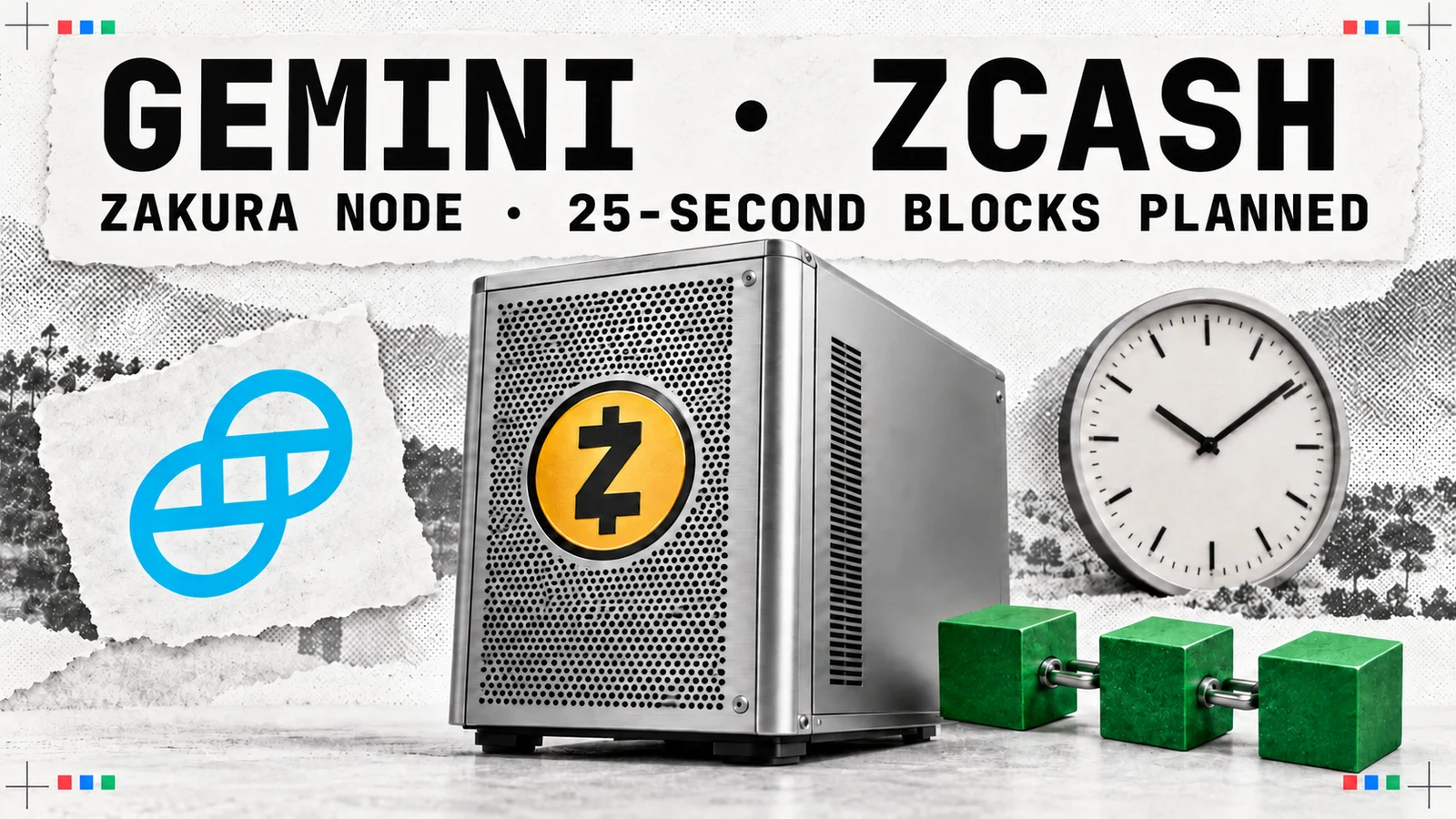
Gemini switches Zcash software ahead of planned 25-second blocks
Gemini now runs Zakura for Zcash. The exchange reports faster synchronisation as NU7 targets a move from 75-second to 25-second blocks.
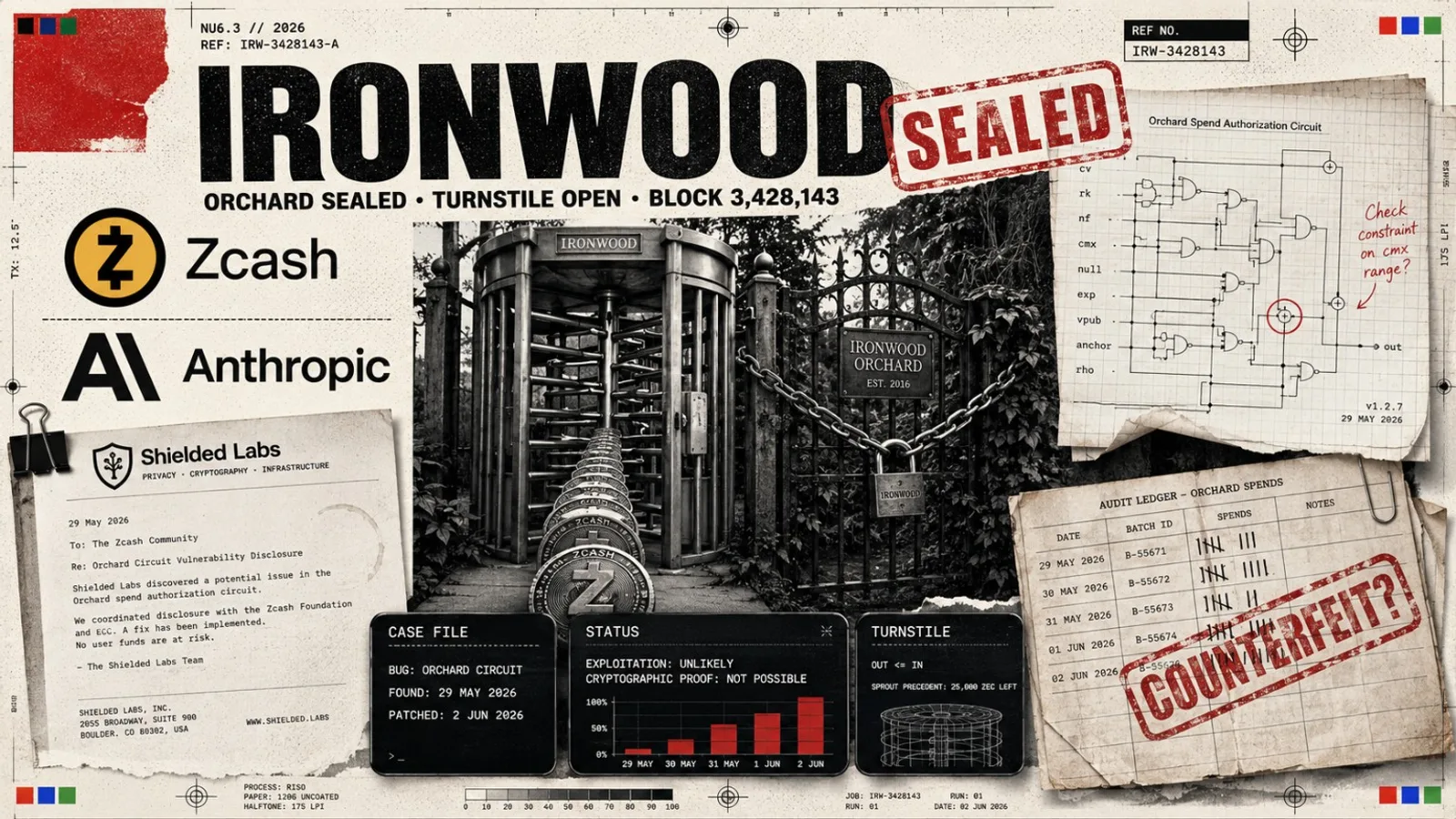
Zcash seals its shielded pool and starts counting: inside the Ironwood turnstile
Zcash activated Ironwood today at block 3,428,143, sealing the Orchard shielded pool and metering every coin out through a turnstile. The counterfeiting flaw behind it sat undiscovered for years and was found in May by a researcher working with an AI model.