UK backs quantum products and skills with £78m
UK announcements combine £50m for quantum products, £20m for networking components and £8m for apprenticeships, with rail, eye-care and radio projects among the recipients.
Listen to this articleListen
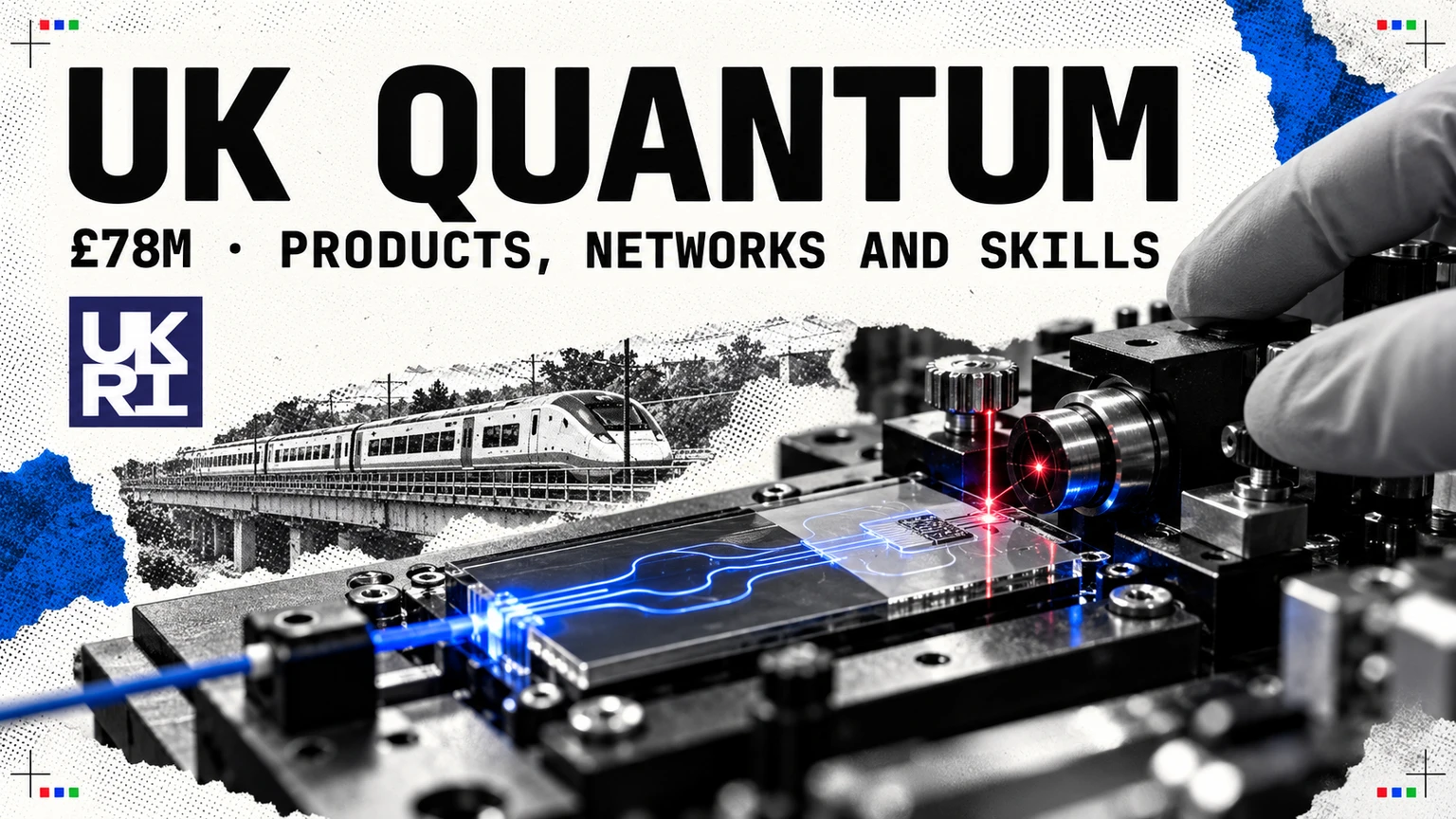
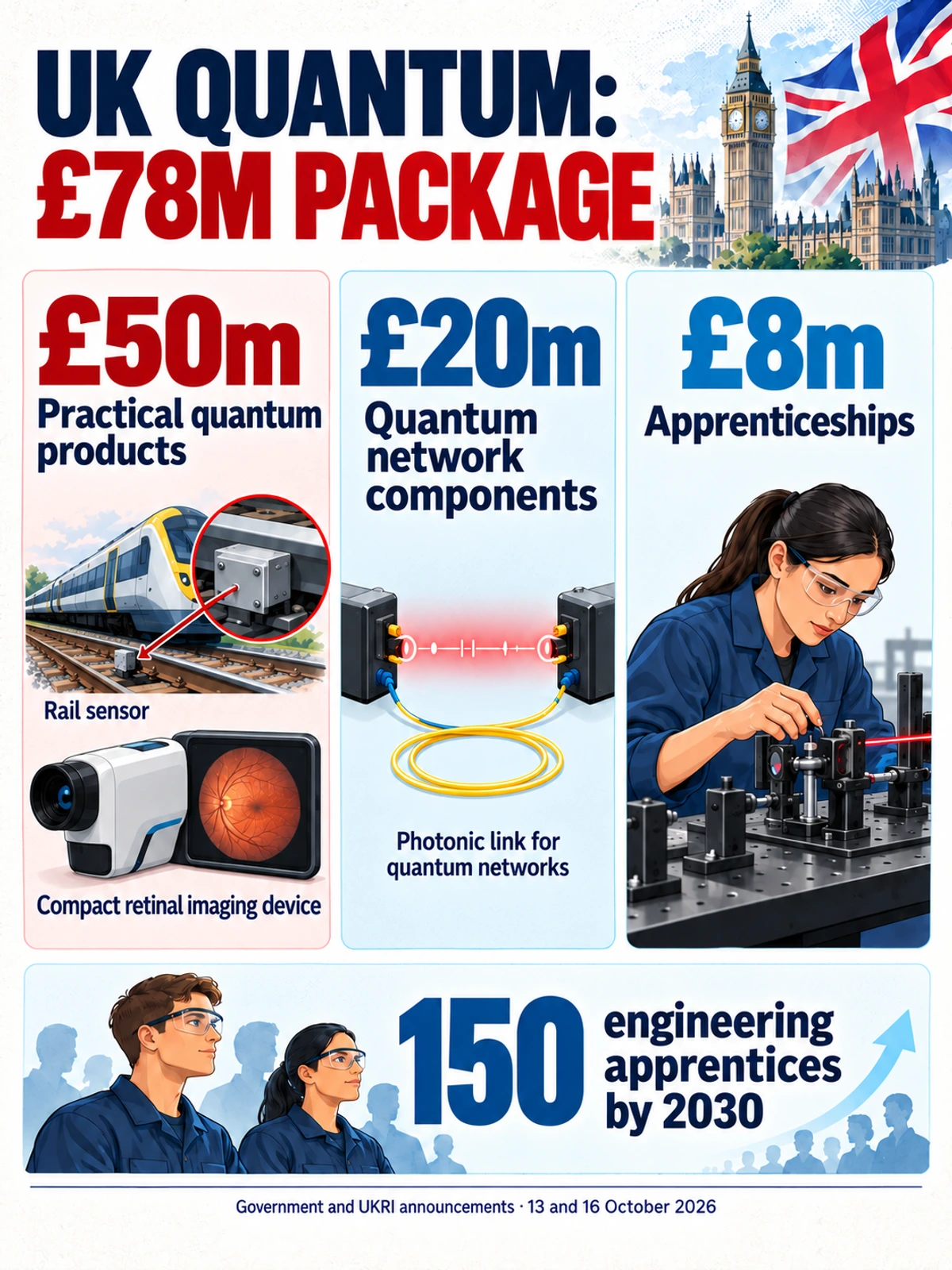
UK quantum funding totalling £78 million spans practical products, networking technology and technical training. The package combines £50 million for commercial projects, £20 million for quantum-networking capability and an £8 million apprenticeship expansion, set out in government and UKRI announcements dated 13 and 16 October 2026.
The spending targets the work needed to turn laboratory systems into equipment organisations can use. Projects range from finding faults on railway lines to making retinal scans accessible outside specialist hospitals.
£50m supports sensors and navigation equipment
The £50 million product programme supports quantum sensing and positioning, navigation and timing technologies. These systems use precisely controlled physical effects to measure signals, movement or time, with applications in transport, health and security.
MoniRail is developing high-accuracy railway positioning that could help locate track and signalling faults in places where GPS is unavailable. QLM Technology is working on cameras that detect and measure greenhouse gases, while Quantum Fabrix is developing clock technology for satellites and other infrastructure.
Siloton, based in Bristol, separately confirmed an £8.4 million Innovate UK contract for its GiraffeOCT eye-imaging system. The two-year project supports clinic and home versions of the device and clinical trials. Its photonic chip compresses optical components into a smaller imaging system intended to make retinal monitoring more accessible.
ColdQuanta UK’s compact radio-sensing work and Cerca Magnetics’ wearable brain-scanning technology also appear among the supported projects. Each has a specific engineering and deployment task within the wider programme.
£20m goes into networking components
The networking allocation backs UK businesses building components and subsystems for future commercial quantum networks. UKRI names lasers and photonic chips among the technologies involved and Sheffield-based Aegiq among the companies supported.
The supply-chain focus is significant. A working network needs compatible light sources, chips and other equipment that can be manufactured and integrated reliably. Supporting these components creates capabilities that larger system builders can use.
| Allocation | Purpose |
|---|---|
| £50 million | Quantum sensing and positioning, navigation and timing products |
| £20 million | Components and subsystems for commercial quantum networking |
| £8 million | QuEST apprenticeship expansion |
Apprenticeships support the people who build the hardware
The £8 million QuEST Apprentices Programme expansion aims to help 150 engineering apprentices support the quantum workforce by 2030. It extends an approach already operating around Harwell in Oxfordshire, including support for businesses in the North West through QuEST North.
The programme addresses technical roles involved in building, maintaining and commercialising equipment. It connects training with employers developing quantum products and their supporting hardware.
The package brings three connected parts of commercialisation together: devices with a defined use, suppliers able to make their components, and technicians able to assemble and maintain them. Its progress will be visible in tested products, clinical and field trials, and the workforce supporting their deployment.