
BlackRock files for Bitcoin fund with capped gains
BlackRock proposes PBIT, an options-based Bitcoin fund with capped upside and an initial loss threshold near 10% per tranche. Outcomes depend on timing and fees.

Listen to this articleListen
BlackRock has filed for a Bitcoin-linked exchange-traded fund that would cap potential gains while seeking protection against deeper price falls. The proposed iShares Bitcoin Managed Protection ETF, ticker PBIT, appears in an SEC filing dated 19 October 2026. Its shares would become available after the registration takes effect.
PBIT would buy and sell call options linked to BlackRock’s iShares Bitcoin Trust ETF, IBIT, or similar Bitcoin exposure. Cash and short-term fixed-income investments would support the strategy. The options determine how much of a price move each portion of the portfolio captures.
The 10% figure is a starting loss threshold
Each options tranche would normally start with its purchased calls struck at about 90% of the reference asset’s value. The filing describes this as an initial maximum loss exposure of approximately 10% for that tranche, before fees and expenses. Protection is intended to operate against further falls below the purchased calls’ strike.
For an illustrative reference price of $100, a 90% strike would sit near $90. The first $10 decline lies within the tranche’s initial exposure. This is the structure described in PBIT’s prospectus; a conventional buffer that absorbs an initial band of losses has a different payoff.
The starting point also changes the experience. If that reference price subsequently reaches $120 while the strike remains $90, the distance back to the strike is $30, or 25% of the new price. That arithmetic illustrates why the filing says potential losses measured after a price rise can exceed the original floor. This illustrative calculation measures the movement in the reference asset.
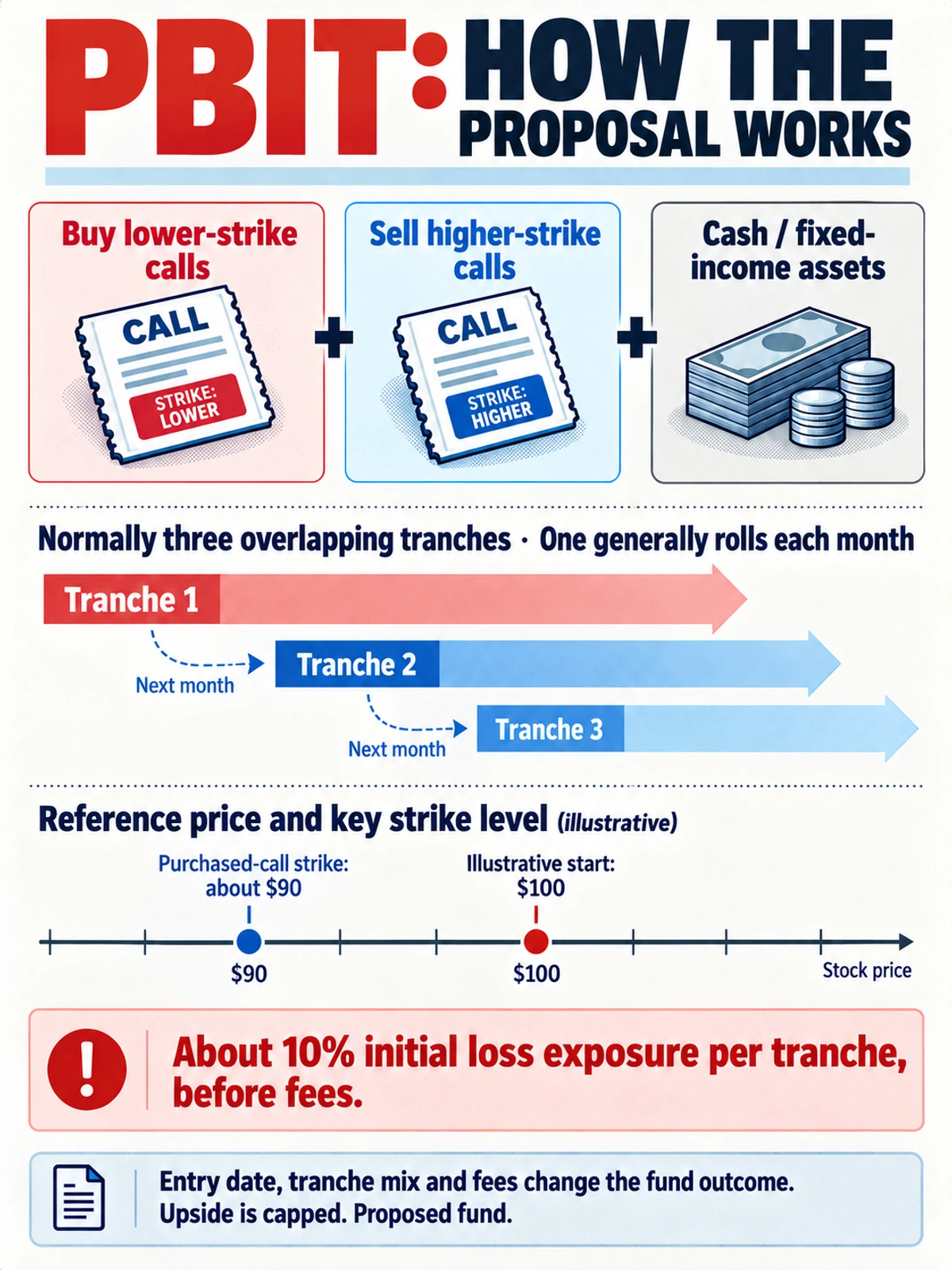
Three overlapping positions would roll each month
PBIT would generally hold three overlapping call spreads with staggered monthly start dates across a calendar quarter. Normally, one tranche would expire and be replaced each month. The manager has discretion over tranche counts, expiry periods and adjustments.
Buying a lower-strike call establishes upside exposure. Selling a higher-strike call helps pay for it and establishes an approximate ceiling on that tranche’s gains. The fund would also earn interest on its cash-management holdings.
| Part of the strategy | Its role |
|---|---|
| Purchased call | Exposure above a lower strike; intended protection against deeper falls |
| Sold call | Helps fund the position and limits upside |
| Three tranches | Different monthly starting dates |
| Cash and short-term debt | Interest income and cash management |
Your purchase date changes the outcome
A PBIT shareholder would hold a changing blend of tranches that began at different prices and dates. The prospectus therefore describes variable fund-level protection and upside participation. Fees increase potential losses and reduce gains, while early position changes can alter the result.
Morningstar’s explanation of defined-outcome funds identifies holding periods, option costs and entry timing as central to understanding these strategies. Those principles help explain why a tranche illustration and a shareholder’s realised return can diverge.
IBIT supplies the underlying Bitcoin price exposure used by the options. PBIT’s proposed holdings would be derivatives and cash-management investments. Its eventual cap levels, tranche weights and expenses will determine the precise trade-off available when shares begin trading.