
Uniswap Labs
Uniswap
the governance token with the fee switch flipped
Key facts
- #26by market value
- Rank
- DeFi tokengovernance, now deflationary
- Type
- 2020token, by Uniswap
- Launched
- 1bnburning now active
- Supply
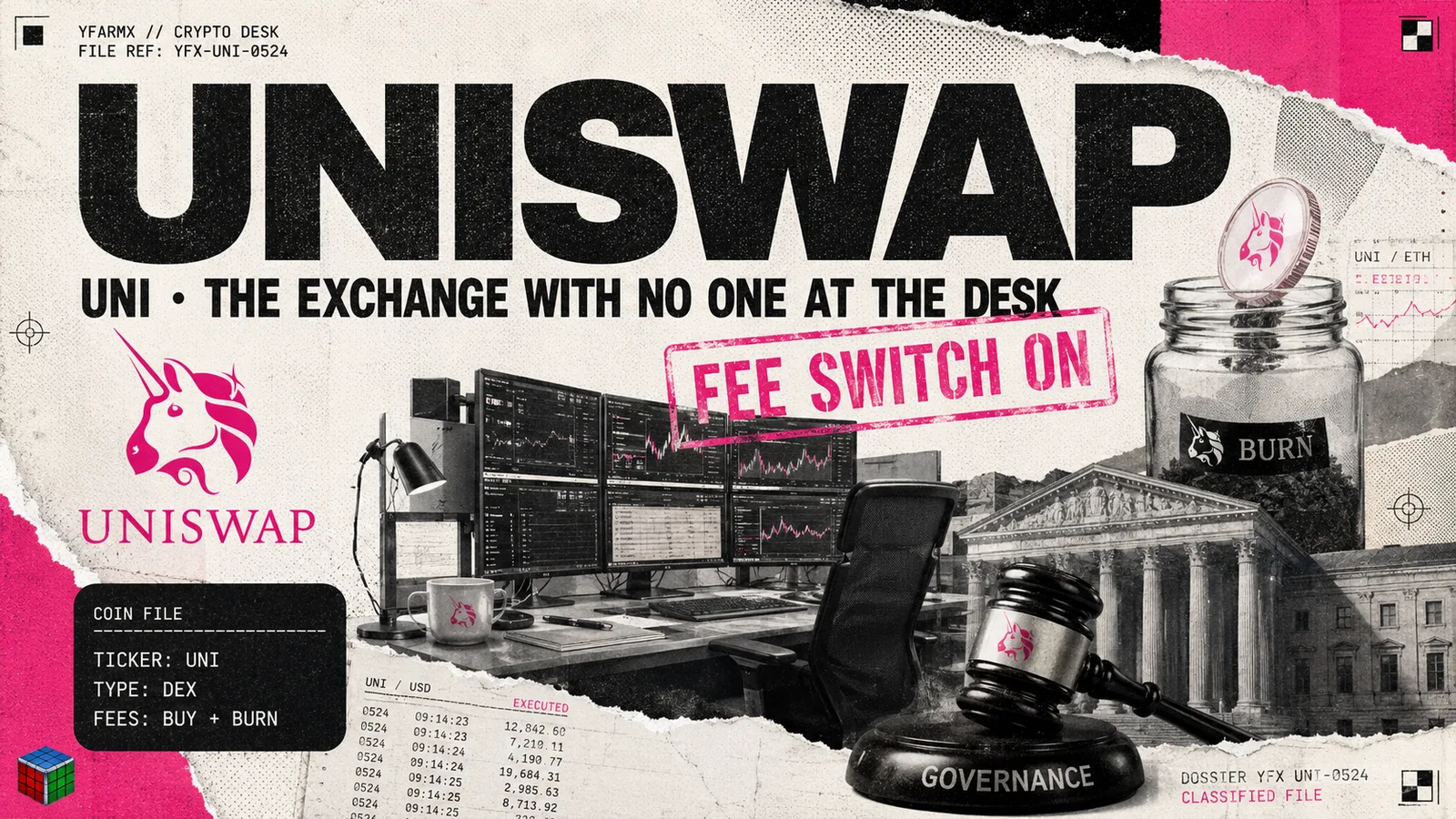
UNI governs Uniswap, the largest decentralised exchange protocol. Since the UNIfication vote passed in December 2025, protocol fees burn UNI.
What it is
UNI is the governance token of Uniswap, the protocol that made decentralised trading work at scale. Uniswap itself arrived on Ethereum in 2018, created by Hayden Adams, a mechanical engineer who taught himself to code after being made redundant, and it replaced order books with a piece of maths anyone can pool money into. The UNI token followed in September 2020, famously airdropped free to every past user of the protocol. For five years it carried voting rights but no share of the fees. That changed in December 2025, which is why the token is worth a fresh look.
How it works
Uniswap is an automated market maker. Liquidity providers deposit pairs of tokens into pools, traders swap against those pools, and prices adjust by formula rather than by matching buyers with sellers. Fees from every trade go to the liquidity providers, with the protocol historically keeping nothing. UNI holders vote on how the protocol evolves, including the long-dormant “fee switch”, the ability to divert a slice of trading fees to the protocol itself. Under the UNIfication changes, protocol fees now flow into an on-chain contract called TokenJar, and value can only be taken out by burning UNI, permanently destroying tokens, through a companion contract called Firepit. Supply was capped at one billion; burning now works against it.
The story so far
The fee switch was crypto governance’s longest-running argument, raised and shelved repeatedly over the years, partly for fear of US regulators treating a fee-earning token as a security. In November 2025 Uniswap Labs and the Uniswap Foundation jointly proposed UNIfication, and the on-chain vote passed in December 2025. Fees are live on v2 pools and the busiest v3 pools, and the follow-on votes are decided: governance Proposal 100, the first tranche of v4 fee activation, and a companion proposal extending protocol fees to Robinhood Chain both passed near-unanimously and were executed on 27 July 2026, with the second tranche of v4 activation yet to reach an onchain vote as of 25 September 2026. The burn has real scale: the protocol recorded a single-day record of about 186,000 UNI burned in June 2026. We covered what this means for token holders and for DeFi in our explainer on DeFi in 2026 and the Uniswap fee switch. Alongside all this, Uniswap Labs shipped v4 of the protocol and its own layer 2 network, Unichain, in 2025.
Where it stands
On 15 October 2026 at 08:34 UTC, UNI traded at $7, with a market value of about $4.37 billion and a rank of 26 among the assets tracked by CoinGecko. Worth watching: the monthly burn totals against new supply unlocks, volume share versus rival exchanges, and how regulators respond to fee-earning governance tokens. Our crypto explainers hub covers the wider crypto picture.
More Crypto
All Crypto →
Uniswap launches Continuous Clearing Auction for fair token launches
Uniswap Labs has unveiled Continuous Clearing Auctions (CCA), a permissionless, on-chain mechanism for price discovery and liquidity bootstrapping on Uniswap v4.
Credit and debit cards will be accepted by Uniswap for cryptocurrency purchases
Through its web app, Uniswap has partnered with fintech company Moonpay to allow users to buy cryptocurrency using debit cards, credit cards, and bank transfers. In most states of the U.S., Brazil, the United Kingdom, and the Single Euro Payments Area, or SEPA, bank transfers will be available.
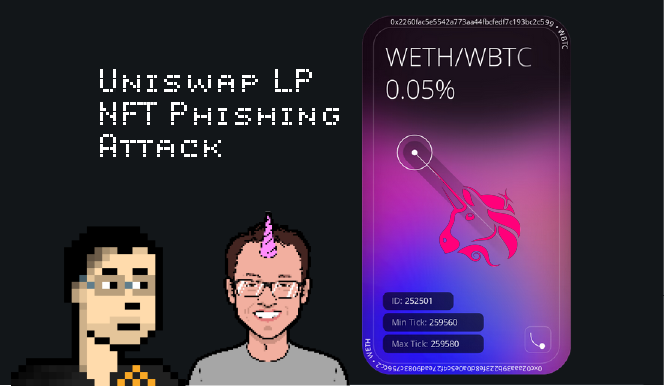
Phishing attack steals $8M in Crypto from Uniswap LP
A phishing scam offering a fraudulent airdrop managed to steal nearly $8 million from Uniswap users on Monday.