SEC staff clear token buybacks on blockchains that already work
The SEC's Division of Corporation Finance published nine staff answers on crypto on 25 September 2026. On a working network, announcing a buyback or paying for upgrades sits outside the managerial effort the Howey test looks for; before launch, a buyback sold as a return could count.
Listen to this articleListen
The staff of the US Securities and Exchange Commission’s Division of Corporation Finance said on 25 September 2026 that a crypto project on a working network can announce a token buyback without making the kind of promise that turns a token sale into a securities offering. The answer is one of nine staff FAQs on crypto assets, and it carries a warning for projects still building: before launch, a buyback pitched as a return for holders “could constitute a representation or promise to undertake essential managerial efforts”.
The answers explain the Commission’s interpretive release of 17 March 2026 and one of them draws on its Regulation Crypto Assets proposal of 18 August 2026. They cover buybacks, network upgrades, marketing, liquid staking tokens and trading platforms. Like all staff guidance, the division says, they “have no legal force or effect”.
What is the Howey test, and why do managerial efforts decide it?
The Howey test is the US Supreme Court’s 1946 definition of an investment contract, and an investment contract is a security. The SEC’s March release restates it: an investment contract is “any contract, transaction, or scheme whereby a person invests money in a common enterprise and reasonably expects profits to be derived from the efforts of others”.
The third element does most of the work in crypto. The efforts that count are, in the words of a 1973 appeals court ruling the release cites, “the undeniably significant ones, those essential managerial efforts which affect the failure or success of the enterprise”. Courts have long placed administrative and ministerial work below that line.
The March release sorts crypto assets into five categories and says three of them, digital commodities, digital collectibles and digital tools, “are not themselves securities”. Bitcoin, ether and XRP are among its named digital commodities. Such a token can still be sold subject to an investment contract when its issuer promises essential managerial efforts, and it separates from that contract once the issuer has kept those promises. So the working question for any project is whether a given action counts as one of those promises, and most of the new answers draw that line.
Can a crypto project buy back its own token?
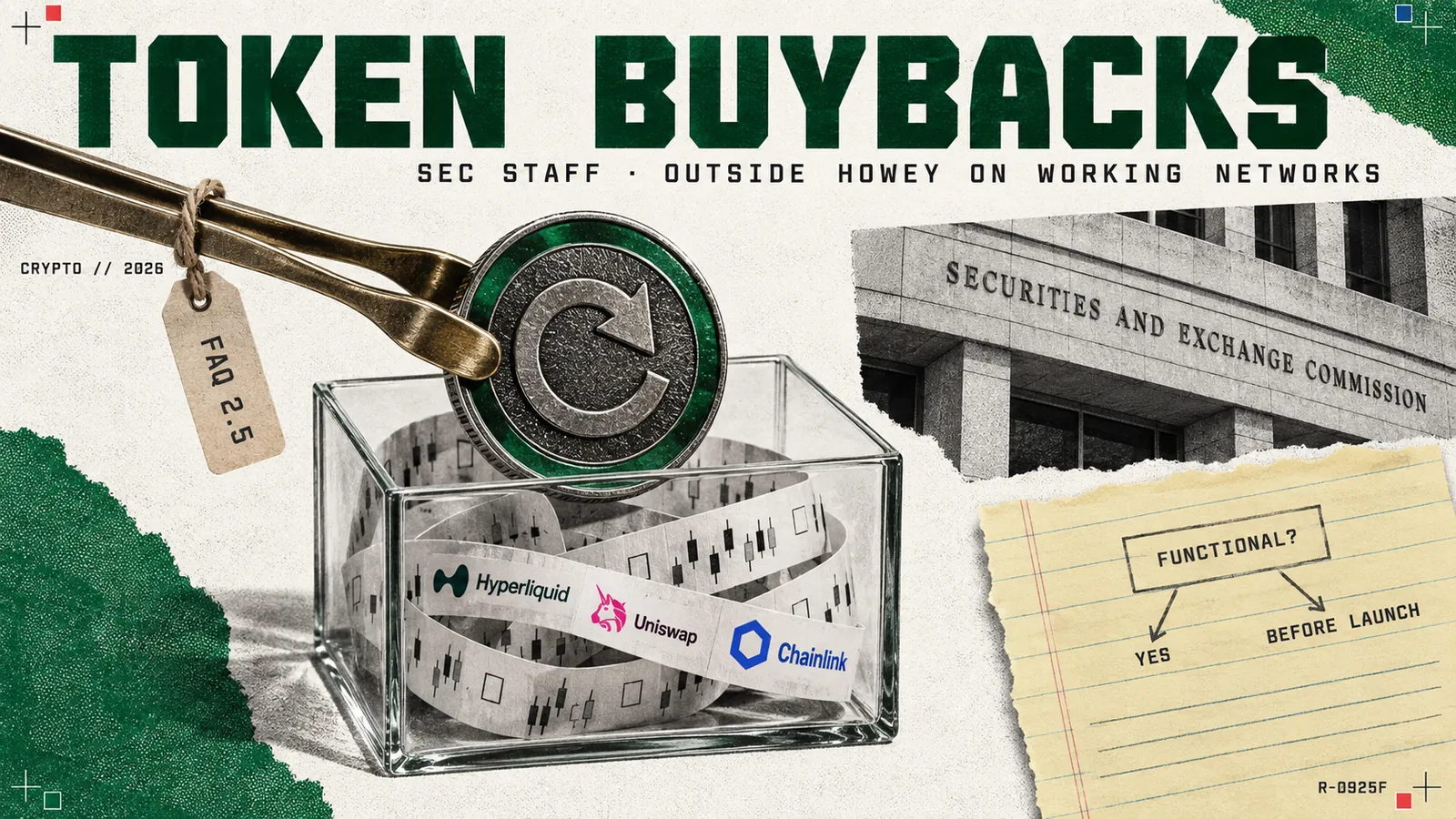

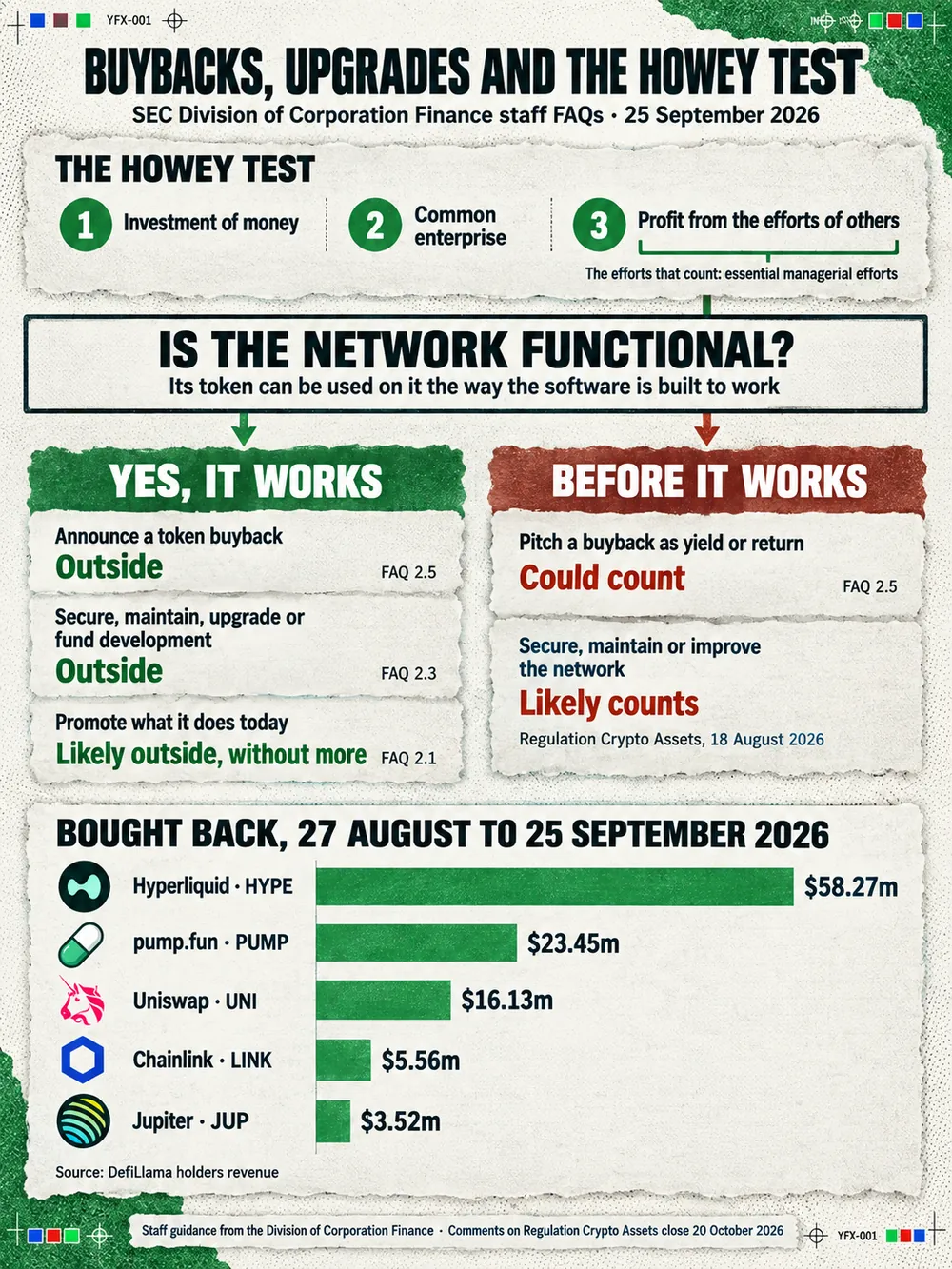
A project on a working network can announce a buyback without that counting as a promise of essential managerial efforts, the staff said in answer 2.5. In the staff’s words: “Where a crypto system is functional, an issuer’s announcement of a non-security crypto asset buyback program would not constitute a representation or promise to undertake essential managerial efforts.” Projects run buybacks, the question notes, for “treasury management, supply reduction, protocol-funded burns, and rebalancing”.
The answer changes before launch. “Where a crypto system is not functional, however, such an announcement could constitute a representation or promise to undertake essential managerial efforts if the issuer presents the buyback as creating yield or return for token holders.”
Functional has a set meaning. The March release calls a crypto system functional “if the system’s native crypto asset can be used on the system in accordance with the programmatic utility of the system”. Answer 1.1 adds a twist for issuers who promised to reach functionality or decentralisation: whether they kept that promise turns on their own description of the milestone, because “each issuer determines the thresholds that must be met”.
Hyperliquid spent $58.27m buying back HYPE in 30 days
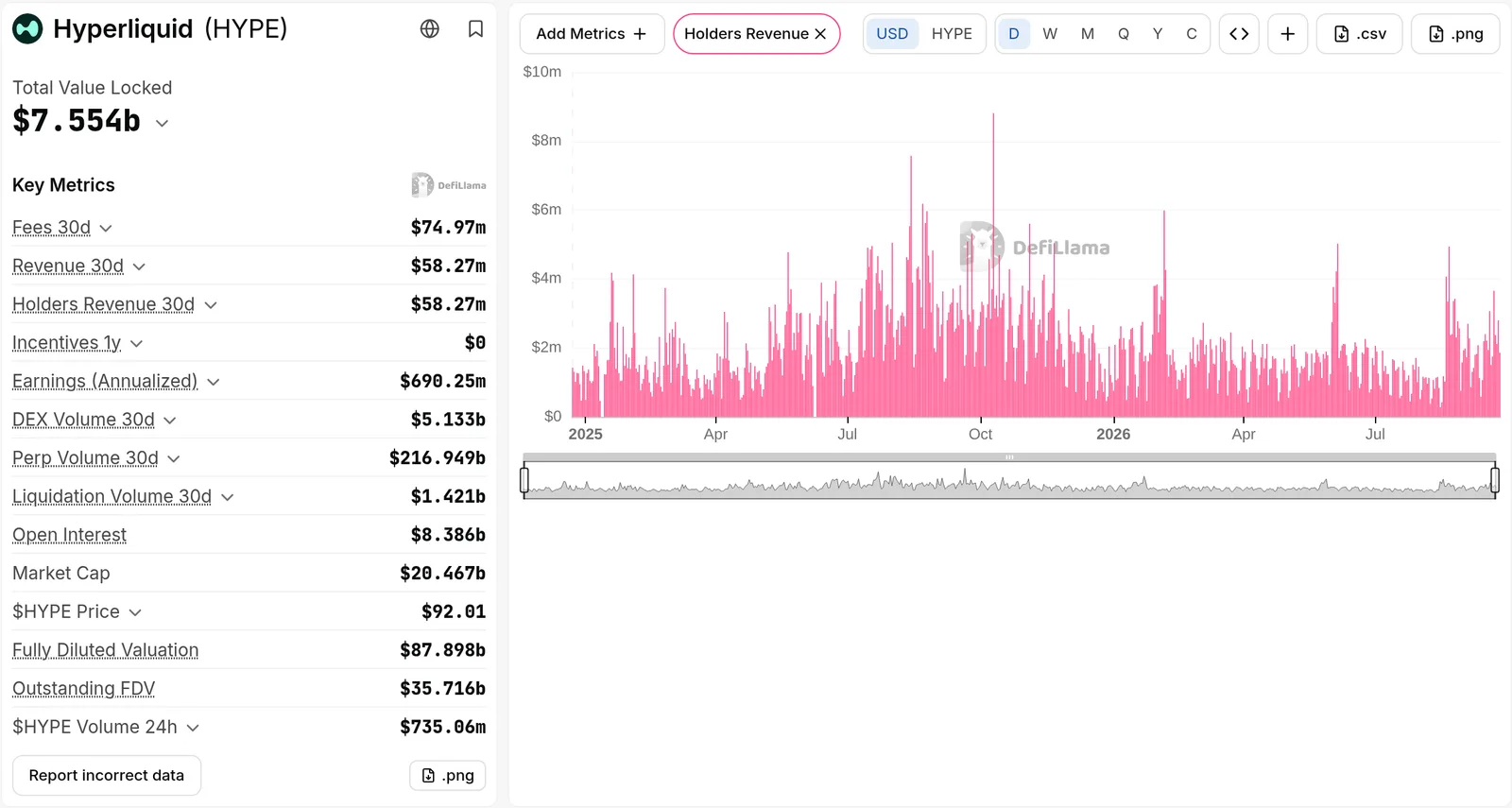
Hyperliquid’s Assistance Fund bought $58.27 million of HYPE in the 30 days to 25 September 2026, according to DefiLlama’s holders-revenue data, read on 26 September. Hyperliquid’s fee documentation says the fund “converts trading fees to HYPE in a fully automated manner as part of the L1 execution”, and that the HYPE it holds is burned, removing it from supply for good.
Four other large programmes ran over the same 30 days, according to DefiLlama.
| Project | Token | Bought back, 27 August to 25 September 2026 | How it works |
|---|---|---|---|
| Hyperliquid | HYPE | $58.27m | 99% of trading fees, excluding builder fees, buy HYPE through the Assistance Fund |
| pump.fun | PUMP | $23.45m | PUMP bought back across pump.fun’s products |
| Uniswap | UNI | $16.13m | A share of pool fees buys and burns UNI, since 28 December 2025 |
| Chainlink | LINK | $5.56m | LINK bought with revenue from onchain and offchain sources |
| Jupiter | JUP | $3.52m | JUP bought with half of platform revenue, since 17 February 2025 |
Whether any one of these networks meets the SEC’s definition of functional, and whether its issuer made promises that attach to its token, turns on that project’s own facts.
Once a network works, upgrades and grants fall outside the test
Once a crypto system is functional, the staff said in answer 2.3, paying for its upkeep and growth is outside essential managerial efforts. The answer covers “services to secure, maintain, improve, or enhance such a system or its functionality, or to facilitate network effects, whether through sponsoring or funding development projects or other similar activities”. Promises to keep providing those services after launch “would not satisfy the Howey test”.
That answer repeats a view the Commission took on page 56 of its Regulation Crypto Assets proposal. A page later the proposal sets out the other side: “Prior to functionality, however, such services are provided or coordinated by the issuer and likely constitute essential managerial efforts.” The same proposal would create two registration exemptions, for offerings of up to $5 million over four years and up to $75 million in each 12-month period, and a conditional safe harbour from the definition of investment contract.
Two more answers deal with who carries the promises. A token stays tied to its investment contract when another party takes over the issuer’s promises of essential managerial efforts, “whether affirmatively or by operation of law” (answer 2.2). Once a functional network has no central party, statements by the issuer “likely would not create a new investment contract”, because nobody controls the system enough to affect its success (answer 2.4).
Is promoting a network a promise of profit?
Promoting what a network does today is unlikely to count, answer 2.1 says. The staff wrote that “promoting a crypto system’s current utility and capabilities likely would not, without more, constitute representations or promises to engage in essential managerial efforts”. Aspirational talk about future features gets the same treatment “if such promotional activities contain nothing promoting the potential for profit”. Both sit under a general caveat: the answer “depends on the facts and circumstances”.
The staff also placed liquid staking tokens. A staking receipt token for a digital commodity that is free of any investment contract is “itself a digital tool”, answer 1.2 says, and one issued by a protocol-based liquid staking provider “also may be classified as a digital commodity”. Answer 1.3 defines the receipt: it evidences a deposit, leaves the deposited asset’s rights unchanged, and its issuer “cannot transfer, lend, pledge, rehypothecate, or otherwise use the deposited asset for any reason”. A trading platform counts as a promoter only if it meets the definition of promoter in Securities Act Rule 405 (answer 2.6).
Comments on the Commission’s crypto rulebook close on 20 October
Comments on Regulation Crypto Assets, which carries the Commission’s own view on post-launch upgrades, close on 20 October 2026. The FAQs themselves are a staff product. They “are not a rule, regulation or statement of the Securities and Exchange Commission”, the division says, and “The Commission has neither approved nor disapproved their content.”
The interpretive release they explain is the Commission’s own, in force since 23 March 2026. Congress’s crypto market bill stalled on 15 September 2026, when the Senate rejected cloture on the CLARITY Act by 49 votes to 50, leaving the SEC and CFTC to write the rules.
For a project already buying back its token, answer 2.5 draws the line in a single sentence. On a working network, the announcement sits outside the promise of managerial effort that the Howey test looks for.
Questions people ask
- What did the SEC staff say about token buybacks on 25 September 2026?
- The SEC's Division of Corporation Finance said on 25 September 2026 that where a crypto system is functional, an issuer's announcement of a buyback programme for a non-security crypto asset would not constitute a representation or promise to undertake essential managerial efforts, the element of the Howey test that looks for profit from the efforts of others. Where the system is still short of functional, the same announcement could count as such a promise if the issuer presents the buyback as creating yield or return for token holders.
- What is the Howey test?
- The Howey test comes from the US Supreme Court's 1946 decision in SEC v. W.J. Howey Co. It treats a contract, transaction or scheme as an investment contract, and so a security, when a person invests money in a common enterprise and reasonably expects profits derived from the efforts of others. The SEC's interpretive release of 17 March 2026 calls the efforts that satisfy the test essential managerial efforts: the undeniably significant ones that affect the failure or success of the enterprise.
- How binding are the SEC staff FAQs on crypto assets?
- The FAQs published on 25 September 2026 are the views of the staff of the SEC's Division of Corporation Finance. The division says they are a staff product rather than a rule, regulation or statement of the Commission, that the Commission has neither approved nor disapproved them, and that like all staff guidance they have no legal force or effect. The March 2026 interpretive release they explain is the Commission's own.
Sources
- SEC Division of Corporation Finance: Frequently asked questions on the application of the federal securities laws to certain types of crypto assets, issued 25 September 2026sec.gov
- SEC: Application of the federal securities laws to certain types of crypto assets, interpretive release 33-11412, 17 March 2026sec.gov
- SEC press release 2026-30: SEC clarifies the application of federal securities laws to crypto assets, 17 March 2026sec.gov
- SEC: Regulation Crypto Assets, proposed rule, release 33-11434, 18 August 2026sec.gov
- SEC press release 2026-76: SEC proposes new Regulation Crypto Assets, 18 August 2026sec.gov
- US Senate: roll call vote 234, cloture on the motion to proceed to H.R. 3633, 15 September 2026senate.gov
- Hyperliquid Docs: Fees, including the Assistance Fundhyperliquid.gitbook.io
- DefiLlama: Hyperliquid holders revenue, read 26 September 2026defillama.com
- DefiLlama: holders revenue rankings, read 26 September 2026defillama.com