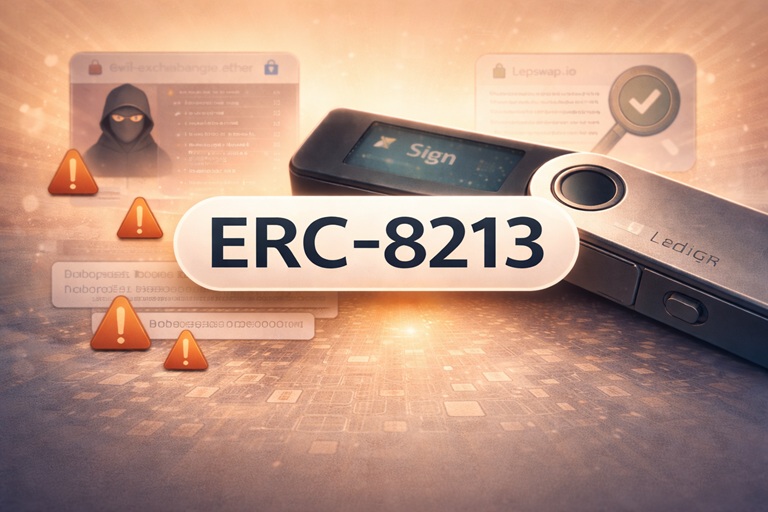
ERC-8213 could make wallet signing clearer for Web3 users
ERC-8213 is a proposal to improve how wallets display signature and calldata information. Here is what ERC-8213 does, why it matters for Web3 security, and what needs to happen next.
Crypto News
The desk's complete reporting record, newest first.
ERC-8213 is a proposal to improve how wallets display signature and calldata information. Here is what ERC-8213 does, why it matters for Web3 security, and what needs to happen next.
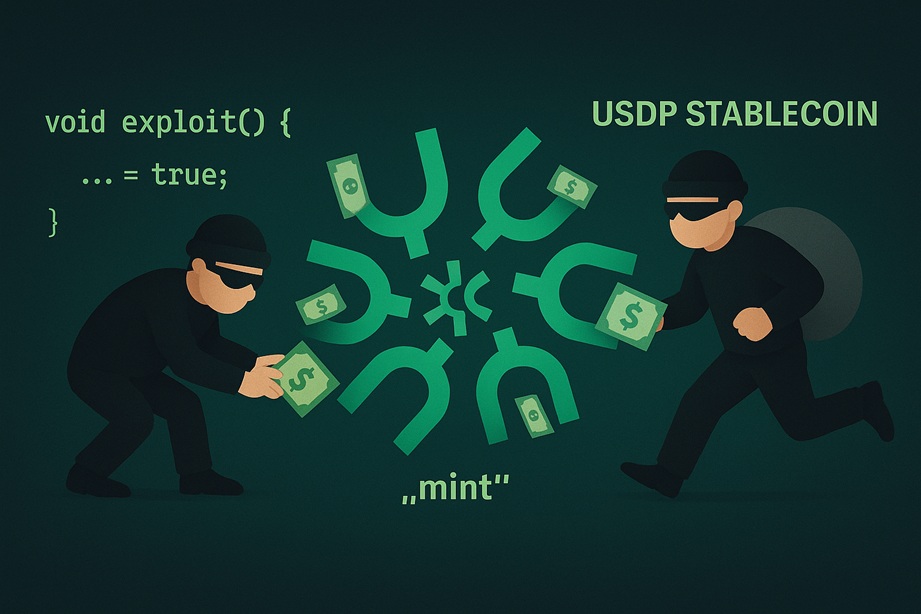
USDP, a decentralised stablecoin protocol launched in September 2025, has been halted after a critical exploit on 4 December allowed an attacker to mint 98 million USDP and drain around $1 million in liquidity, including roughly 230+ stETH from pools.
Aave’s next upgrade is about to give Bitcoin a proper job. The Babylon Aave integration will let lenders post native BTC as collateral in Aave V4 without wrapping it, parking it on an exchange, or trusting a custodian.
Ethereum’s Fusaka hard fork is now live on mainnet, with finality confirmed shortly after the 22:00 GMT slot on 3 December. Client teams report a smooth transition, strong validator participation, and no immediate hiccups, exactly what you want from a major scaling upgrade.
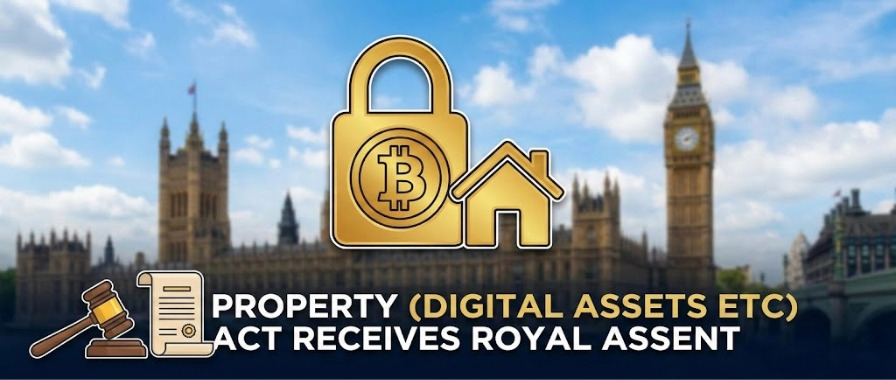
The Property (Digital Assets etc) Act 2025 has now received Royal Assent, giving cryptocurrencies, stablecoins and NFTs explicit recognition as property in UK law. Until now, courts treated digital assets as property on a case-by-case basis.
Anthropic’s latest frontier red-team study is a neat, slightly chilling proof-of-concept: AI exploits blockchain at scale, in simulation, and it is already economically worthwhile.
The EIL SDK is the developer-facing wrapper around Ethereum’s new Interoperability Layer, giving you a way to script multi-chain operations (transfers, swaps, gas payments) as a single logical flow rather than a pile of per-chain transactions.
A Cryptomixer takedown announced today has removed one of Europe’s longest-running Bitcoin mixers from the ransomware and darknet tool kit.
On 30 November 2025, Tether chief Paolo Ardoino issued a fresh X thread attacking S&P’s “weak” USDT rating.
On Sunday, the Yearn Finance protocol’s legacy yETH product was exploited, allowing an attacker to mint effectively unlimited yETH and drain almost 9 million dollars’ worth of ETH and liquid staking tokens from Balancer and Curve pools in a single sequence of transactions.
The Cocoon Confidential Compute Open Network is Pavel Durov’s attempt to pull AI inference away from hyperscale clouds and into a decentralised, privacy-preserving marketplace.
From 1 January 2026, the UK will plug its crypto industry into CARF, the OECD’s Crypto-Asset Reporting Framework.
On 26 November 2025, S&P cut USDT from “4 (constrained)” to “5 (weak)” on its stablecoin stability scale, citing a growing tilt towards risk assets in the backing and persistent disclosure gaps around who actually holds and manages that collateral.
The upbit hack is only a few days old, but Upbit already has a preferred explanation: a cryptographic bug in its own Solana wallet stack that may have allowed attackers to infer private keys from biased signing data.
The tornado cash sanctions story has flipped from headline enforcement win to legal setback for the US Treasury.
If you wanted a neat snapshot of where crypto sits in late 2025, the latest wave of Grayscale ETFs will do the job. You now have a Dogecoin ETF on NYSE Arca, a Chainlink trust angling for its own conversion, and an XRP product riding the post-SEC settlement boom.
Monad’s long-trailed mainnet went live on Monday, but the monad airdrop that came with it landed hard.
The proposed MSCI index exclusion puts bitcoin-heavy treasuries at the centre of what was meant to be a routine index review.
The Bitmain investigation, codenamed Operation Red Sunset, pulls Bitcoin mining hardware into the national security frame. Federal agencies are now treating Chinese-made ASIC rigs as potential vectors for espionage and grid disruption in the United States.
The Kalshi raise (one billion dollars at an eleven-billion valuation) turns a once-niche prediction venue into a flagship “information markets” play.
On 21 November, a malformed delegation transaction turned an obscure library bug into the most visible cardano disruption the network has seen.
Telegram and Khabib Nurmagomedov are testing what happens when fight culture, fandom and on-chain collectibles meet.
Ethereum has spent five years telling users to “go to Layer 2”. The Ethereum Interop Layer (EIL) is the moment it admits that sending people to a maze of rollups without a map was never going to scale.
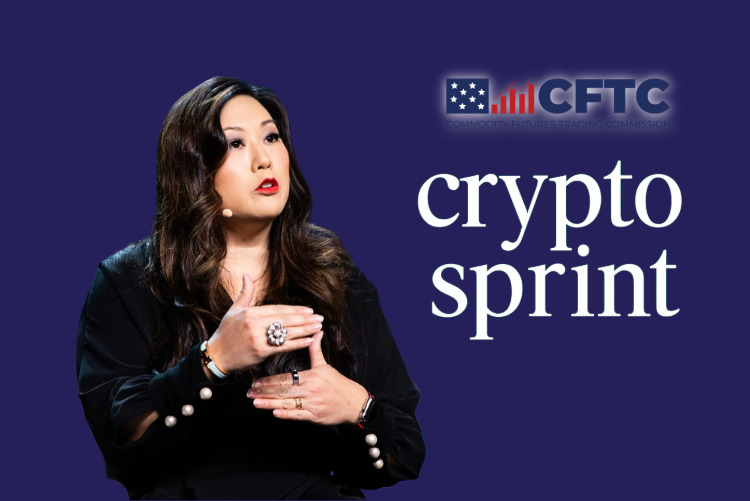
At FIA EXPO, Acting CFTC Chairman Caroline Pham used her keynote to talk about digital assets in the dry language of market structure, not moral hazard.
Kraken has finally done what it has hinted at for years: raised real Wall Street money to match its market ambitions. On Tuesday, the exchange closed an $800 million dual-tranche round at a $20 billion valuation, one of the largest private raises in crypto this year.
In Interpretive Letter 1186, the U.S. Office of the Comptroller of the Currency (OCC) confirms that national banks can hold crypto on their own balance sheets purely to pay blockchain transaction costs. If a bank wants to move customer assets on Ethereum, it can hold a working float of ETH for gas.
Jupiter Exchange announced that Metis Router v7 is now a standalone project, formally decoupled from the Jupiter brand.
If Part 1 of Coin Laundry was about the exchanges, Part 2 is about the bit they’d rather not talk about: the places where crypto turns back into envelopes of cash, diamonds, gold bars and yacht rentals, often without anyone asking who you are.
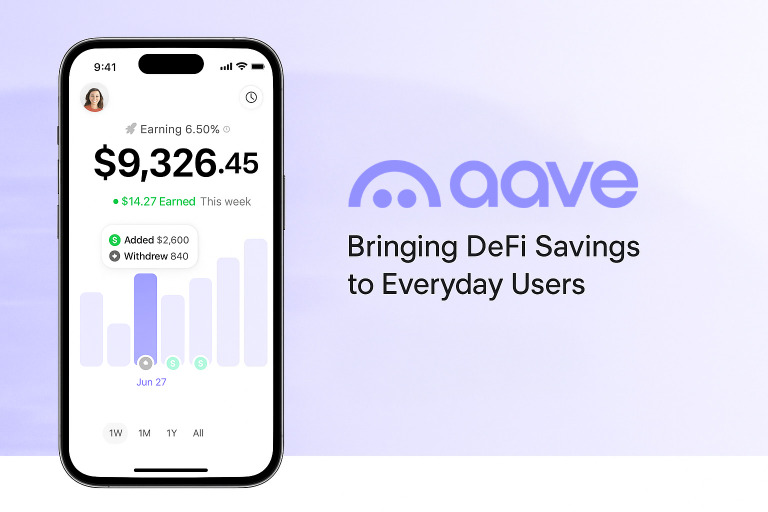
The Aave app is their pitch to people who don’t really care about liquidity mining or governance, they just want better savings.
The International Consortium of Investigative Journalists, The New York Times and 36 partner outlets allege in Coin Laundry that at least $28 billion in suspect crypto passed through major exchanges between mid-2023 and mid-2025, despite enforcement actions and compliance rebrands.
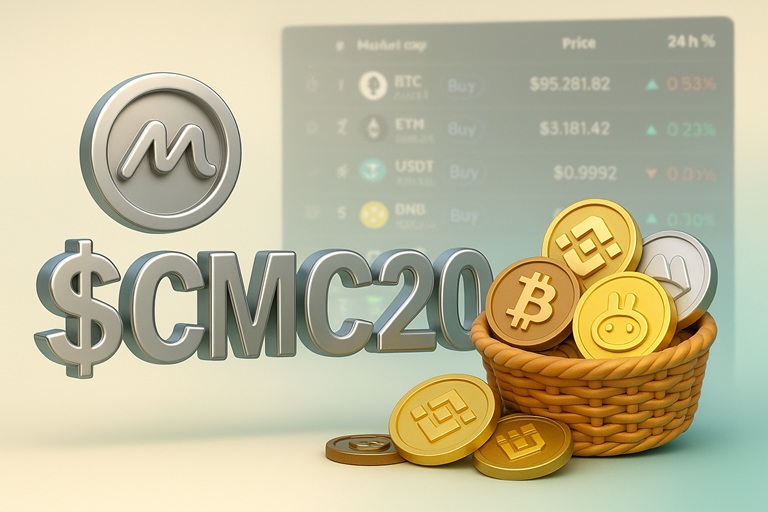
CoinMarketCap has just announced the $CMC20. In partnership with Reserve Protocol and Lista DAO, the CMC20 is a fully tradable index token on BNB Chain that tracks the top 20 cryptocurrencies by market cap (minus stablecoins, wrappers and other outliers).
At Ethereum Cypherpunk Congress 2 in Buenos Aires, Vitalik Buterin used his keynote to deliver this point: Ethereum has done the hard work on privacy and security – and then handed it to users through terrible wallets.
When Canary Capital’s XRP ETF (XRPC) rang the opening bell on Nasdaq on Thursday, it didn’t so much launch as arrive with a calling card. Day-one trading hit $58 million, the highest debut of any ETF in 2025 across more than 900 launches, neatly edging out Bitwise’s Solana ETF.
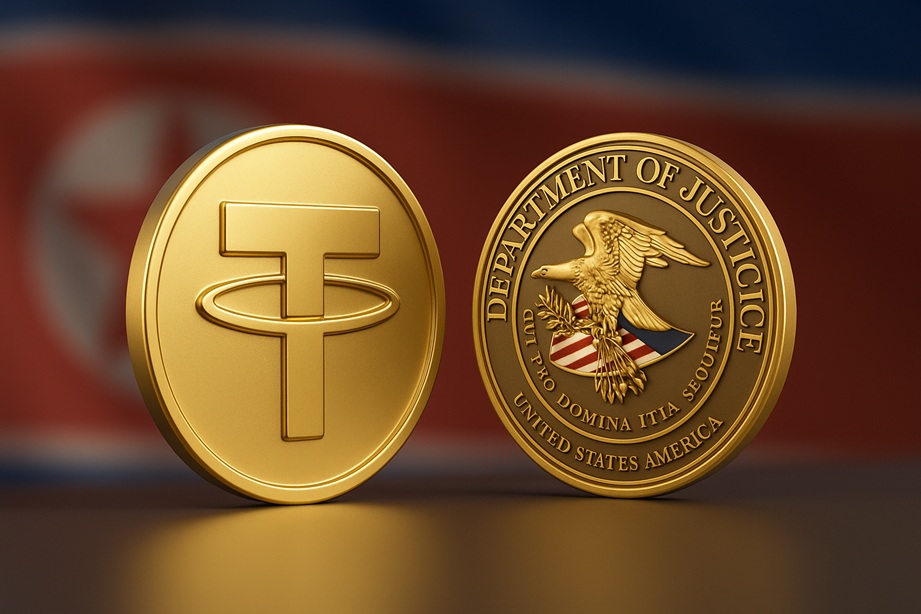
On Friday, the U.S. Department of Justice (DOJ) announced its latest North Korea crypto seizure: more than $15 million in Tether (USDT) linked to state-backed hackers and a sprawling fake-IT-worker network that burrowed into 100+ American companies.
Aave Labs has secured MiCA authorisation from the Central Bank of Ireland for its subsidiary Push Virtual Assets Ireland Limited, clearing it to offer regulated euro to stablecoin on/off-ramps across the EEA.
A month after the SEC streamlined spot-crypto ETF listings, the U.S. market is seeing a genuine altcoin rush.
Bybit’s in-house research team, Lazarus Security Lab, has published a report “Blockchain Freezing Exposed” claiming that 16 major blockchains already include code or controls that can freeze or restrict user funds, with a further 19 networks able to add similar tools with relatively minor upgrades.
Cash App and Solana are teaming up on stablecoin payments: Block’s Cash App will add USDC transfers on Solana rails for eligible users in early 2026, giving its 57 million monthly users instant, low-fee, on-chain dollars without wallet setup or gas management.
The U.S. Department of Justice has stood up a new Scam Center Strike Force to dismantle transnational “pig-butchering” operations that use crypto investment schemes to fleece Americans. Led by the U.S.
On 13 November, Grayscale Investments publicly filed an S-1 with the U.S. SEC to list on the New York Stock Exchange under the ticker GRAY, a decisive step toward a grayscale IPO after a confidential submission in July.
Page 4 of 13 · Open the full Newswire · RSS